From Data Overload to Decisive Action: Willow’s Role in Modern Healthcare

Healthcare organizations are at a pivotal moment, with new opportunities to enhance outcomes and efficiency. Beyond delivering exceptional patient care, they must balance sustainability targets, minimize downtime across increasingly complex infrastructure, and do more with leaner teams. As per the U.S. Department of Energy Better Buildings Initiative, healthcare facilities consume nearly 10% of all energy used by the U.S. commercial sector while representing less than 5% of commercial floorspace. This convergence of challenges illustrates the need for intelligent orchestration with a platform that can transform fragmented data into actionable insights. There is an opportunity to embed institutional knowledge into digital workflows and enable predictive, AI-driven operations.
Let’s double-click into top-of-mind problems for healthcare facilities and how Willow provides a path forward.
Challenges Facing Healthcare Facilities
- Energy, Cost, and Carbon Pressure
Healthcare systems are among the most energy-intensive infrastructure environments in the world. Hospitals operate 24/7, rely on highly specialized equipment, and must maintain strict environmental conditions to ensure patient safety. It is imperative to sustain reliable heating, cooling, ventilation, lighting, and power for clinical spaces.
At the same time, many healthcare organizations have adopted ambitious sustainability goals, aiming to cut greenhouse gas emissions on the order of 50%, and reducing energy consumption up to 20% in the next five to ten years. These commitments are essential for both regulatory compliance and long-term environmental responsibility, but they also create a complex operational challenge.
Facilities teams are expected to lower energy consumption and reduce costs without compromising patient comfort or critical system uptime. That is increasingly difficult in environments where infrastructure is complex. Traditional approaches with maintenance and manual workflows can’t scale. Instead, there is an opportunity to move towards real-time, adaptive control systems. Continuously optimizing performance and proactively surfacing issues can help teams make fast, informed decisions across the built environment.
- Aging Workforce and Knowledge Loss
A demographic shift is reshaping the field technician workforce. Across healthcare organizations, veteran technicians with decades of experience are retiring, taking with them critical operational knowledge that was built over years of hands-on problem solving. Much of this expertise often lives in paper manuals, aging legacy systems, or with individuals. As a result, hospitals are facing a growing “tribal knowledge” gap.
This loss of institutional knowledge creates a significant risk. New technicians face a steep learning curve as they inherit responsibility to manage complex systems. Troubleshooting becomes slower, less consistent, and more dependent on trial and error. As a result, operational efficiency declines.
Hospitals are highly specialized ecosystems that require deep expertise to manage effectively. As facility teams work towards modernizing operations, the ability to preserve knowledge and augment technician expertise is becoming increasingly important.
- Patient Experience in the Built Environment
The quality of a healthcare facility plays a critical role in shaping patient outcomes and satisfaction. Every aspect of the physical environment contributes to how effectively care is delivered and experienced. For instance, temperature control and air quality go beyond being comfort factors. They are essential for infection prevention and patient recovery, particularly in high-stakes environments such as operating rooms and intensive care units. Poor ventilation or improper climate control can increase the risk of complications and slow healing. Similarly, noise levels significantly influence patient comfort, rest, and emotional well-being.
Healthcare settings have zero tolerance for unplanned downtime. A failing HVAC system or malfunctioning asset is far more than an inconvenience. It has the potential to interrupt care delivery and delay critical procedures, hence jeopardizing patient safety. Ensuring that all systems operate seamlessly is essential to maintaining high standards of care and safeguarding patient health.
- Data Overload
Modern hospitals generate vast amounts of data every day from a wide range of sources, including sensors, building management systems (BMS), inspections, and Preventive or Corrective Maintenance tasks. Signals on equipment performance, environmental conditions, and operational workflows are continuously generated and captured. Despite this abundance of data, much of it remains underutilized.
Reliance on reactive and calendar-based maintenance strategies generates a higher volume of information than condition-based approaches would. A lack of integration across systems results in data silos that prevent a unified view of operations. Manual workflows further compound the problem, consuming valuable technician time and increasing the likelihood of human error.
While the sheer volume of raw data can be overwhelming, there is an opportunity for normalization and generating insights for meaningful and timely actions.
Willow’s Solution: From Awareness to Autonomy
Willow addresses these challenges by bringing together a normalized data layer with a rich ontology, a Knowledge Graph and automated workflows into a unified platform. The goal is to enable healthcare facilities to move from reactive operations to proactive, predictive, and eventually autonomous performance.
Active Control for Optimized Energy Consumption
Operational excellence in facilities starts with full visibility into building performance. Willow’s Skills run continuously, processing normalized telemetry data and generate Insights as anomalies occur or thresholds are exceeded. With this foundation, facilities teams gain a deep, actionable understanding of how energy is consumed and where inefficiencies exist. This enables taking targeted action using existing workflows.
A key innovation driving this transformation is the ability to combine occupancy signal to drive HVAC optimization by scaling back setpoints when spaces are unoccupied. Predictive occupancy signal can be pulled from space bookings and calendars. Willow’s Active Control enables automation of this feedback loop. As a result, energy consumption is aligned with real demand, ensuring that spaces are conditioned only when needed. This leads to significant energy savings at scale, while still maintaining strict standards for comfort, safety, and regulatory compliance.

In this manner, Willow empowers facility teams to proactively identify areas and time periods of energy waste and prioritize interventions. This shift from reactive to data-driven operations is critical for meeting sustainability targets. At the same time, it ensures that healthcare environments remain safe and comfortable to support high-quality patient care.
Willow Copilot: Capturing and Scaling Institutional Knowledge
Willow offers a rich document store that supports upload of troubleshooting documents, O&M manuals and curated knowledge bases. Techniques like vectorized indexing and Retrieval Augmented Generation (RAG) enable LLM-driven experiences to contextually access relevant information. This experience fundamentally transforms how organizational knowledge is captured, stored, and accessed. Instead of relying on scattered documents, organizations can store and retrieve critical resources easily, ensuring that valuable expertise is maintained.

For technicians in the field, troubleshooting is simplified with queries such as “I got fault code 12. What should I do?” Prompts are processed by AI, retrieving the relevant information from a vectorized index of uploaded documents, starting with the ones directly related to the asset in context. Willow Copilot synthesizes responses into clear, grounded answers while providing citations to the original uploaded documents.
The implications are significant in the form of reduced reliance on individual experts. Onboarding and effectiveness of new technicians is accelerated. Teams are able to promote consistent, high-quality maintenance practices across the board. Ultimately, Willow Copilot transforms fragmented knowledge into a dynamic layer that empowers teams and enhances operational efficiency.
Ensuring Patient Comfort with Predictive Intelligence
Willow’s Skills ensure continuous monitoring of core building systems that ensure patient comfort. Insights are generated as anomalies are detected, ensuring that issues are detected early. Despite these measures, if patients report comfort issues, Willow’s rich ontology makes it easy to understand which VAVs serve the patient room, so technicians can be pointed precisely towards where and how to resolve the issue.
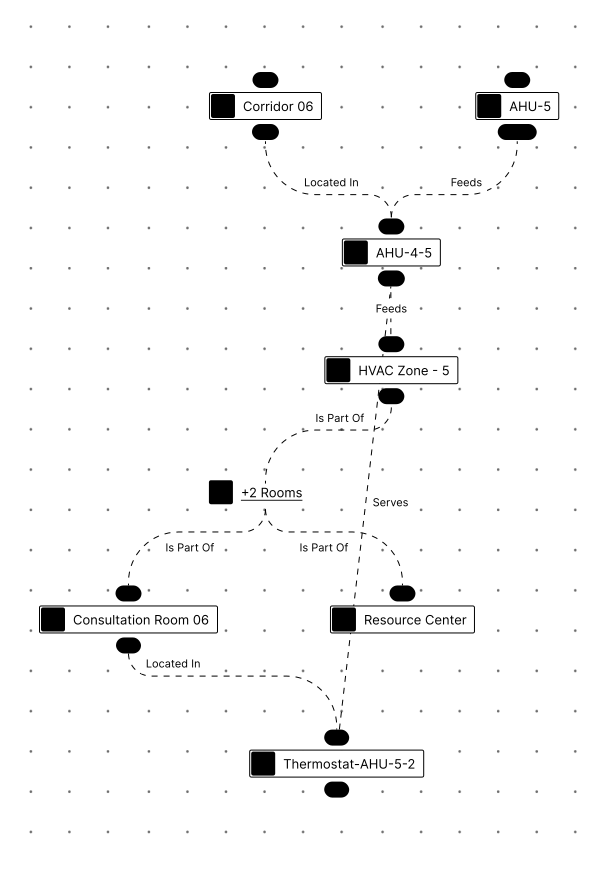
In this example, relationships in the Knowledge Graph indicate that AHU-4-5 is physically located in Corridor 06, and rooms it serves via an HVAC Zone are Consultation Room 06 and Resource Center. With the twins and relationships in place, when a comfort issue is reported in Consultation Room 06, it’s easy for the facilities team to see the location where the technician can be sent to perform repairs or servicing.
AI Reports: Simplifying Data to Daily Decisions
One of the biggest hurdles in modern facilities management is simply knowing what to focus on each day. Willow addresses this with AI-driven reports that transform raw data into a prioritized action plan.
Information buried in a myriad of complex systems puts the onus on Facility Managers to pull relevant data together every day. Willow strives to simplify this with a consolidated report informing the team on what needs action. By constantly monitoring indoor environments trending towards uncomfortable, issues can be addressed proactively, before they become noticeable and escalate into complaints. This is refreshing for overloaded teams drowning in notification fatigue.
Instead of sifting through dashboards and alerts, Facility Managers receive clear summaries of what matters most, upcoming maintenance tasks, emerging anomalies and contextual recommendations tailored to their building. Natural language prompts make it simple to build these customized experiences at scale, spanning entire portfolios.
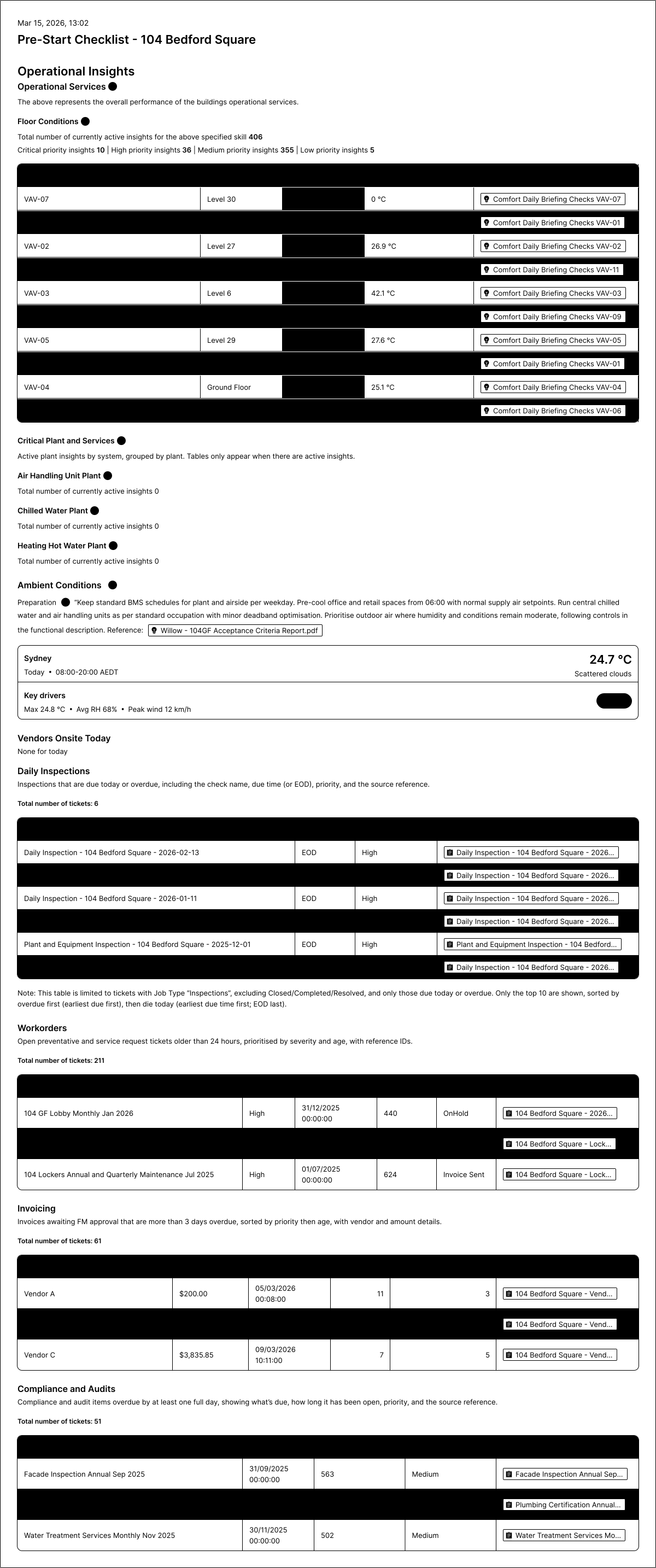
Behind the scenes, Willow’s AI Agents make it consistent and repeatable to aggregate and process vast streams of telemetry data and generate reports in a consumable format. This allows teams to plan proactively and allocate resources effectively, ensuring that data collected from multiple systems and workflows is used effectively.
Closing Thoughts
The future of healthcare facilities lies in being adaptive and proactive. Willow brings this vision to life by helping organizations meet ambitious sustainability goals, preserve and scale critical knowledge, ensure patient comfort and safety, and help facility teams tackle data overload.
Skills run across data sets to generate Insights and create visibility and Active Control automates energy optimization. Willow Copilot democratizes technician expertise and ensures seamless access to institutional knowledge. A rich ontology and knowledge graph help balance patient comfort with minimal down time. AI-driven reports guide daily decisions. Together, they establish a foundation for autonomous operations where systems operate efficiently, risks are addressed before they escalate, and teams can focus on strategic priorities instead of constant firefighting. In a landscape where sustainability, workforce challenges, patient expectations, and cost pressures are all intensifying, Willow enables healthcare organizations to turn data into intelligence, and intelligence into meaningful action. This ensures optimal outcomes for facilities as they evolve into responsive, energy-efficient environments that elevate patient care.