Reimagining Building Comfort

Temperature is the #1 complaint in commercial buildings. As per a recent survey, 68% of facility managers say it’s their single biggest issue. Hot and cold calls from occupants are the most visible and persistent category of complaints across corporate offices, hospitals and university dorms. They interrupt work, frustrate occupants, and drain technician time. Comfort issues can be symptoms of underlying asset performance problems or systemic inefficiencies that traditional building operations struggle to detect early. For decades, facilities teams have been stuck in a reactive loop of responding to hot/cold calls: triaging them, adjusting the VAV box, only until another issue surfaces. Multiplied across hundreds of rooms and thousands of assets, comfort becomes a constant drag on productivity, energy efficiency, and occupant satisfaction.
Willow breaks this cycle. Through a combination of Skills, a rich ontology, and AI-driven analytics, Willow transforms comfort management from reactive firefighting into a proactive, data‑driven strategy. Teams can anticipate issues before they surface, resolve them faster when they do occur, and use analytics to identify chronic underperformers that need repair or replacement.
Let’s explore further how this elevates both technician workflows and occupant satisfaction.
1. Skills and Insights: Stopping Hot/Cold Calls Before They Happen
Rooms trend warm or cold long before an occupant feels uncomfortable enough to submit a complaint. VAV boxes drift out of calibration, dampers stick, and sensors age. AHUs struggle to maintain discharge air temperature. These early signals are detectable, but only when the right data and context are captured and interpreted. Willow solves this with Skills that run 24×7 and generate Insights.
Comfort Skills form a category dedicated to occupant issues. They target factors such as temperature and humidity to ensure that environments remain within predefined comfort boundaries for productivity and well-being. By analyzing telemetry and control data such as zone temperatures, humidity, airflow, and setpoints, these Skills detect conditions that are likely to impact the comfort of building occupants. When conditions such as too hot, too cold or insufficient airflow are detected, Comfort Skills generate actionable Insights to guide corrective actions.
As an example, Zone Temperature Below Heating Setpoint – Zone Cold triggers when indoor temperatures drop below designed heating setpoints, indicating possible heating system malfunctions or control discrepancies.
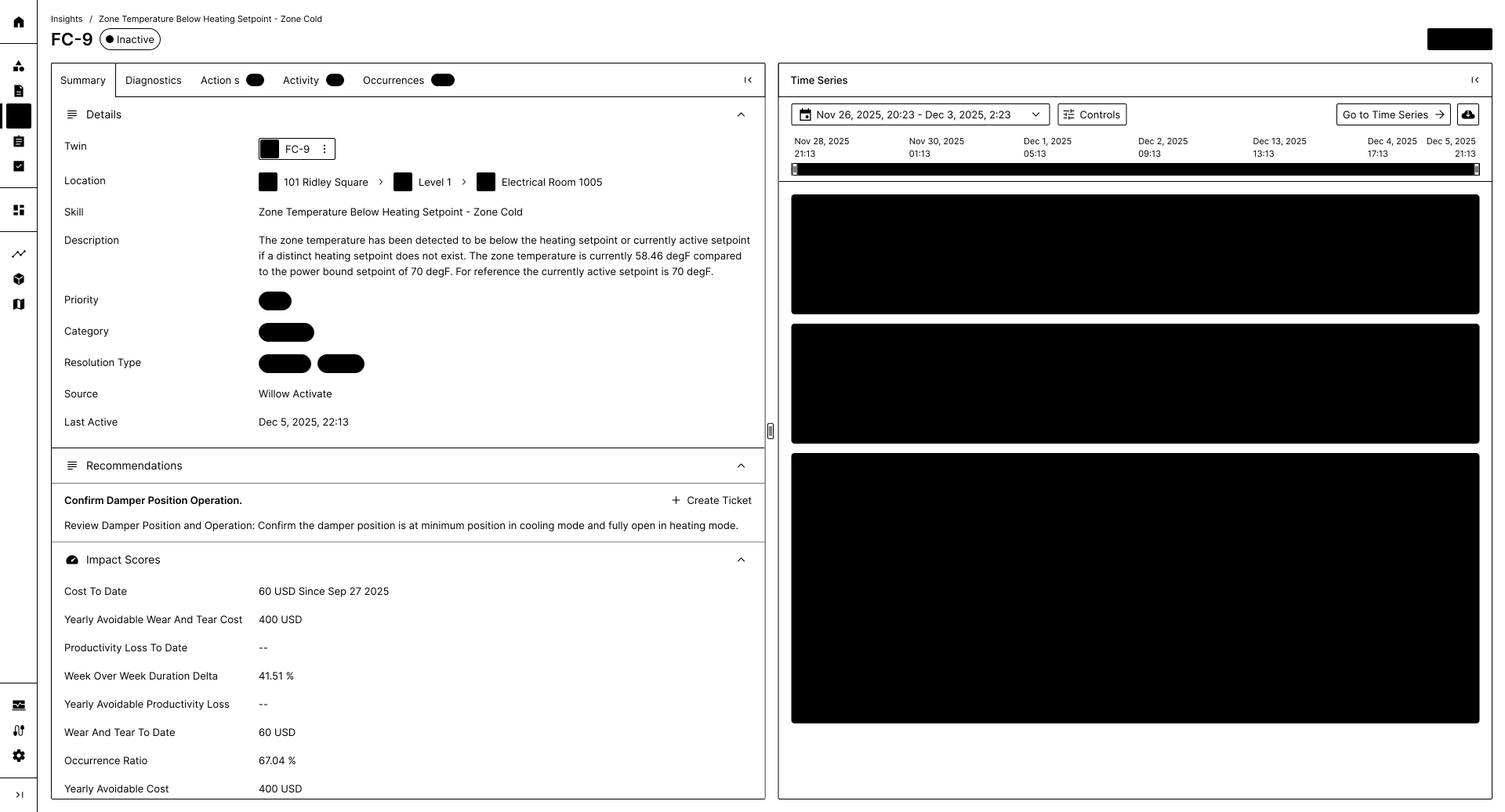
Insights can be actioned with automatic or manually generated tickets that are enriched with diagnostic details and crisp recommendations on how to address the problem. Daily Briefings in the form of AI Reports can keep facility teams informed. In this manner, proactive monitoring and resolution of Insights can greatly reduce the volume of incoming hot/cold complaints from occupants.
2. Rich Ontology: Shrinking the Time from Complaint to Fix
Even with the best preventative strategy, comfort issues can still occur, and when they do, speed matters. Occupants expect quick responses, and technicians need the right information at their fingertips to diagnose and resolve issues efficiently.
Willow’s ontology allows creation of twins for HVAC Zones connecting to occupied spaces, as well as AHUs and VAVs, expressing relationships described in Test and Balance reports for the building. As a result, the Knowledge Graph makes it easy to understand which VAVs serve the patient room, so technicians can be pointed precisely towards where and how to resolve the issue.
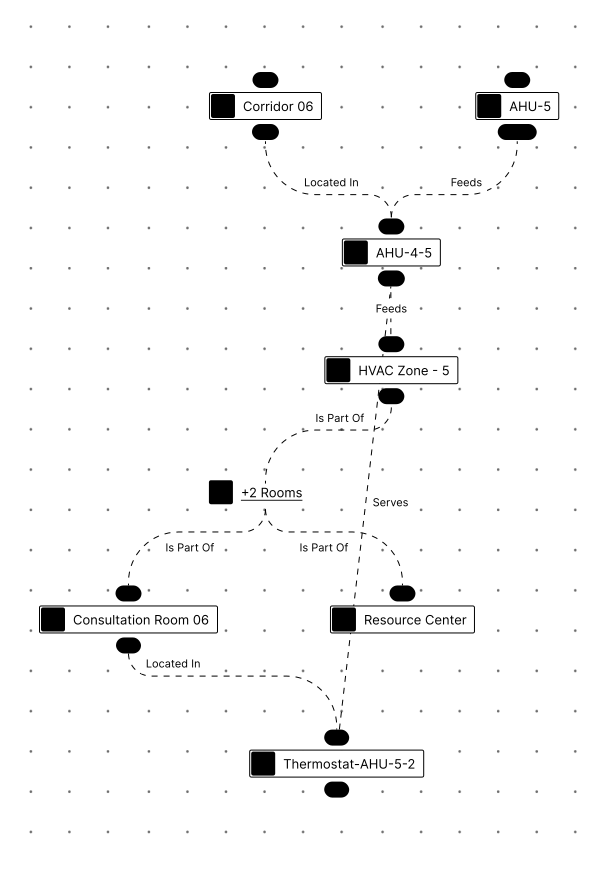
In this example, relationships in the Knowledge Graph indicate that AHU-4-5 is physically located in Corridor 06, and rooms it serves via an HVAC Zone are Consultation Room 06 and Resource Center. With the twins and relationships in place, when a comfort issue is reported in Consultation Room 06, it’s easy for the facilities team to see the location where the technician can be sent to perform repairs or servicing.
3. Asset Health: Identifying Bad Actors for Replacement
Comfort issues are often symptoms of deeper asset performance problems. A VAV that generates repeated hot/cold calls can be a sign of a failing component, a mistuned control sequence, or an asset nearing end of life.
‘Bad Actors’ are assets that consistently generate issues, require frequent maintenance, and accumulate long work order histories that are costly to the organization. These assets may impact performance, system uptime, and incur costly replacement of parts. They may also influence asset lifespan, and overall maintenance productivity. Without analytics to proactively identify ‘Bad Actors’, patterns of repeat failures can remain hidden. Teams might treat each complaint as an isolated incident, applying quick fixes that temporarily mask the problem but never address the root cause.
Willow changes this by providing AI-driven experiences that reveal chronic underperformance and guide smarter capital planning. With a carefully constructed prompt, Willow Copilot can quickly surface assets with recurring issues, long resolution times, and high maintenance frequency. These insights help organizations make informed decisions about repair vs. replace. AI does the heavy lift, adding unprecedented levels of speed to the capital planning process. The system flags assets with frequent failures and long resolution times, then adds context for further investigation.
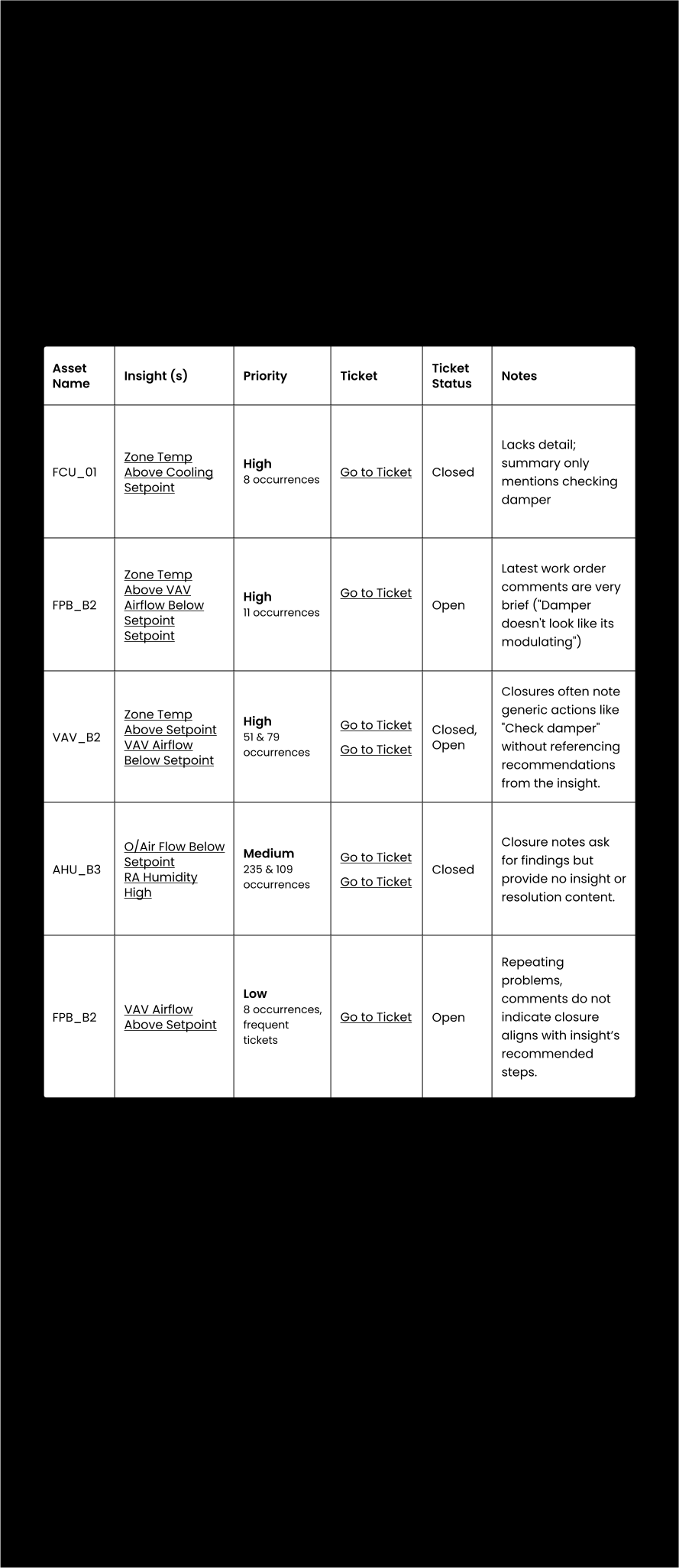
By combining real‑time data, historical context, and asset health analytics, all available via a conversational interface, Willow helps teams make smarter decisions about which assets to replace and when to replace them. This ensures capital dollars are spent where they will have the greatest impact on comfort, reliability, and energy performance.
Conclusion
Hot and cold calls will always be a reality in commercial buildings, but they don’t have to be a constant drain of resources. With Willow, comfort management becomes proactive, precise, and data‑driven. Prevention reduces the number of issues before they reach occupants. Fast resolution ensures that when issues do occur, they’re diagnosed and fixed quickly. AI-driven analytics and conversational experiences reveal chronic underperformance and guide smarter repair and replacement decisions. The result is a modern comfort strategy that improves occupant satisfaction, reduces operational noise, and strengthens the long‑term health of building systems. As comfort becomes predictable, technicians become empowered, and operations become more efficient, buildings become better places to work, collaborate, and thrive.