Product Innovation Through Customer Obsession

As a frontier AI-driven platform, a customer-obsessed mindset keeps Willow anchored in the practical realities of facilities, infrastructure, and operations. It pushes product decisions toward real-world problems. These include reducing downtime and simplifying workflows. Customer signal directs where the platform should evolve next, which in turn shapes the Willow experience. Willow prioritizes the highest-impact pain points, validates solutions quickly, and ships improvements that immediately make a difference. Often, operational challenges are universal across domains. Product investments suggested for facility management in healthcare can transcend to aviation, university campuses, stadiums and more.
This blog highlights five areas of investment shaped directly by customer conversations, refined through agile delivery, and now shipping as part of the platform.
1. AI-Generated Reports
Customers using the Daily Briefing feature in Willow Copilot consistently shared a common point of feedback: “Would it be possible to combine multiple prompts to produce a single output, and then set it up for periodic delivery via email?” So we envisioned Reports.
Anyone using Willow with the correct permissions can now set up a series of prompts, each in their own section. These prompts can be tested individually to preview responses for accuracy and repeatability.
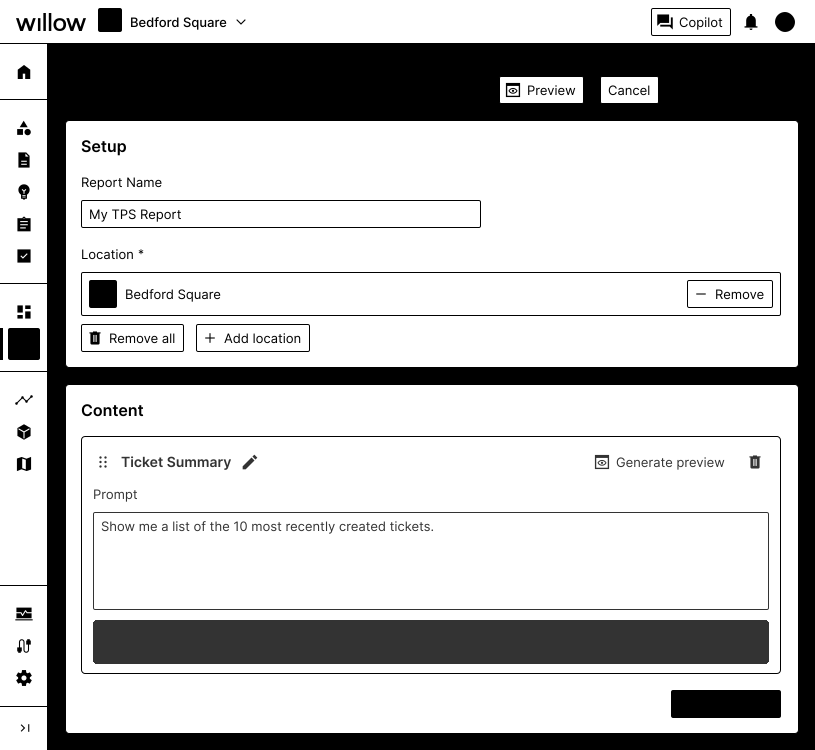
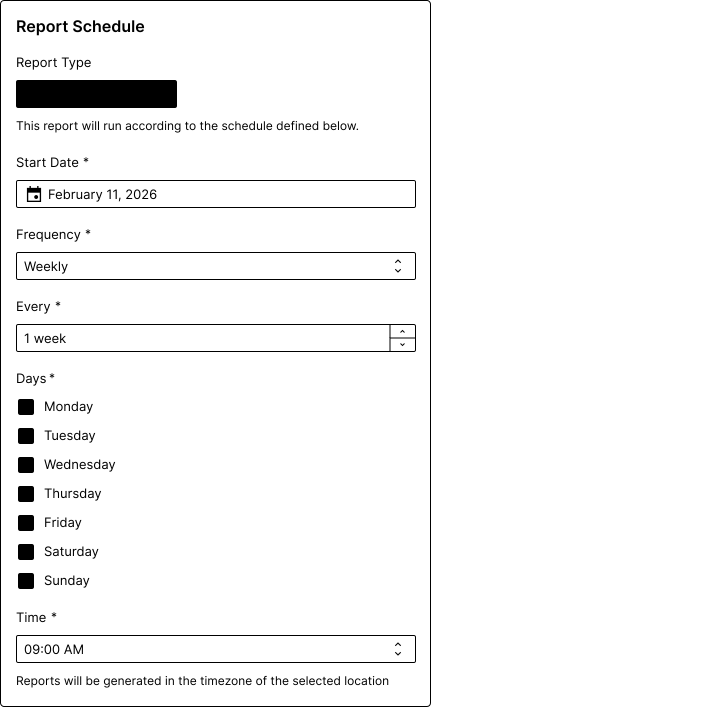
Schedule cadence can be set up to be daily, weekly or monthly.
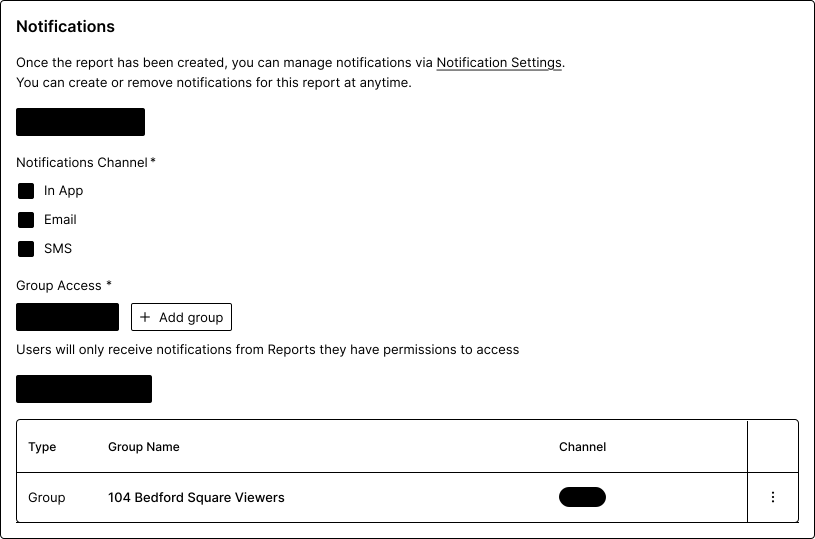
Further, reports can be set up for sharing across groups of users. Willow supports user management for RBAC, so most customers already have pre-configured user groups.
2. Visualizing Assets with Insights and Tickets
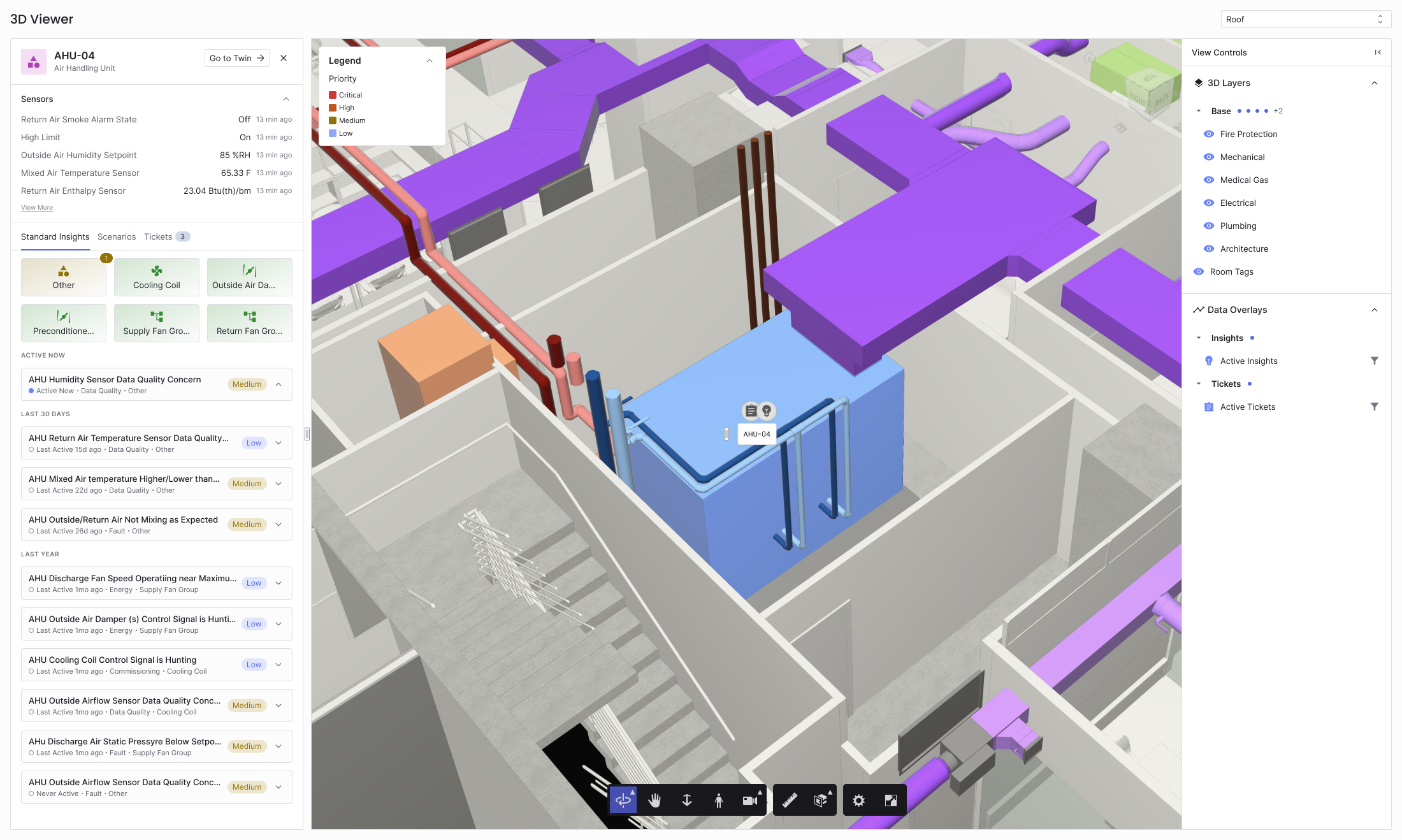
Customers often share BIM files for 3D visualization in Willow. This is in addition to providing architecture diagrams and “As Built” documents to hydrate the Knowledge Graph. A question arose: “Can the two be combined into a single view?” This recommendation has turned into a powerful experience in Willow. Customers can navigate to a specific AHU and see where it is located in the building relative to the building structure and other assets. Simultaneously, they can also access the Knowledge Graph to show active Insights and Work Orders.
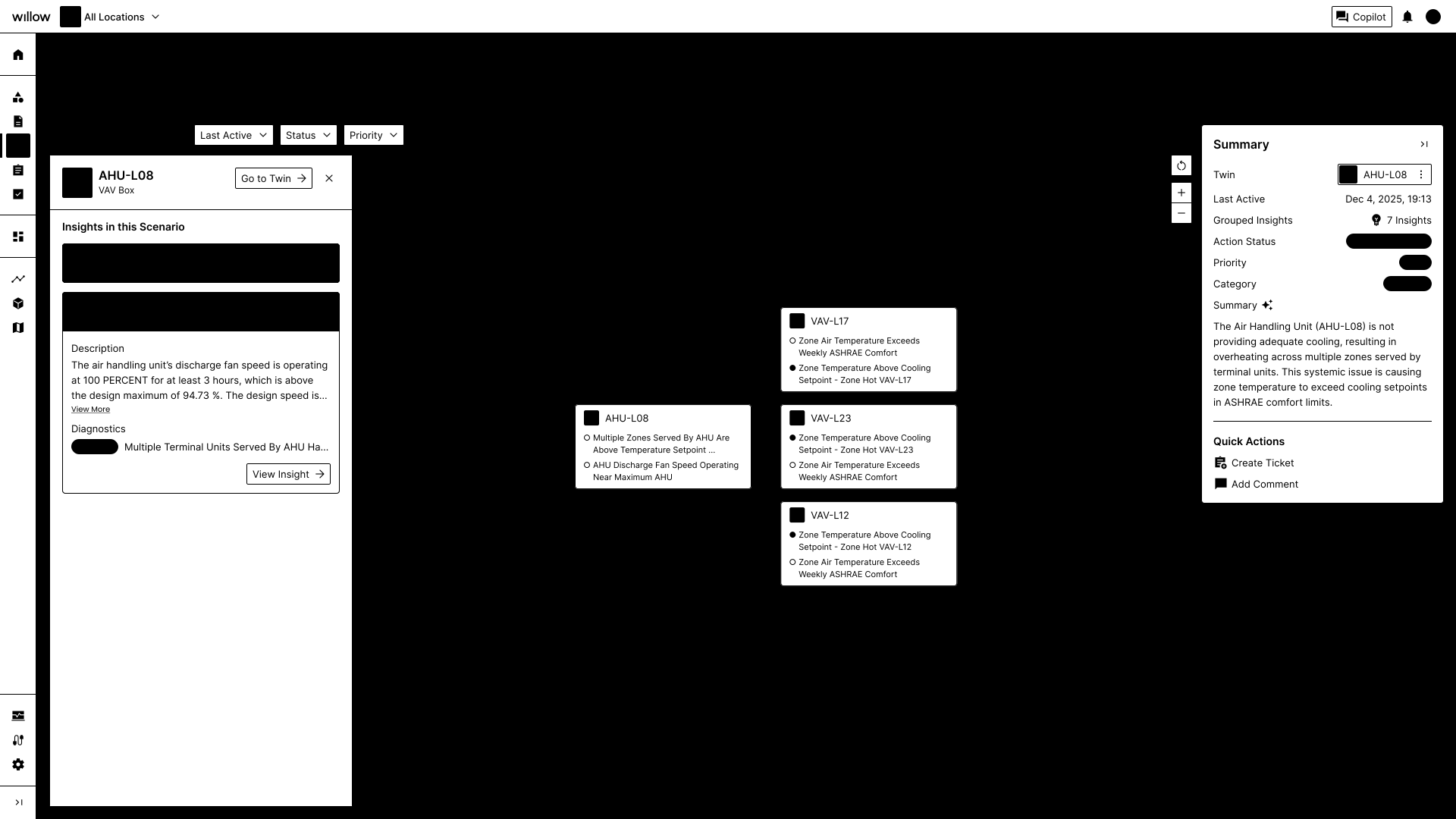
3. Scenario Insights to Reduce Alarm Overload
A common problem in our industry is the abundance of alarms and alerts. As Willow monitors systems across the portfolio, Skills can generate hundreds of Insights. Customers shared that it is cumbersome for facility teams to stay on top of reviewing and actioning these consistently. In response, we envisioned Scenario Insights that condense groups of related issues with a common root cause, as well as upstream or downstream impact. This enables teams to focus on addressing a significantly smaller set of core issues.
4. App Status for Connector Observability
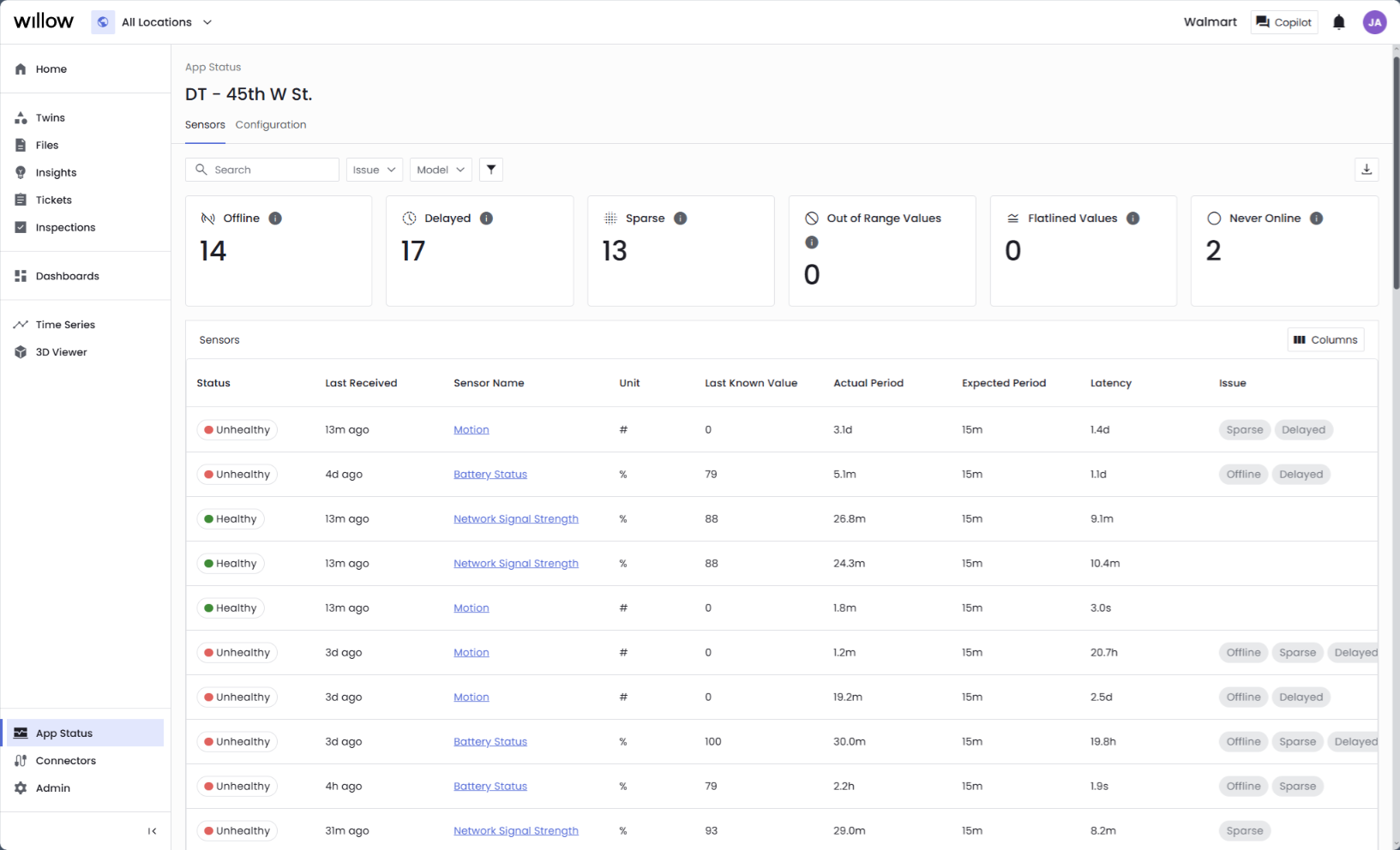
Observability is key to understanding gaps and disruptions in telemetry flow which may be caused by network issues, sensors going offline, and more. Based on customer feedback, Willow has opened up access to data that was previously used only in internal tools for diagnostics and troubleshooting. Willow’s App Status functionality provides a clear, live overview of connector and sensor performance in real-time. It is easy to see which sensors have flatlined, are out or range, and more. This feature puts observability across the entire system in the hands of customers, generating transparency into where issues are.
5. Active Control for Automating Workflows
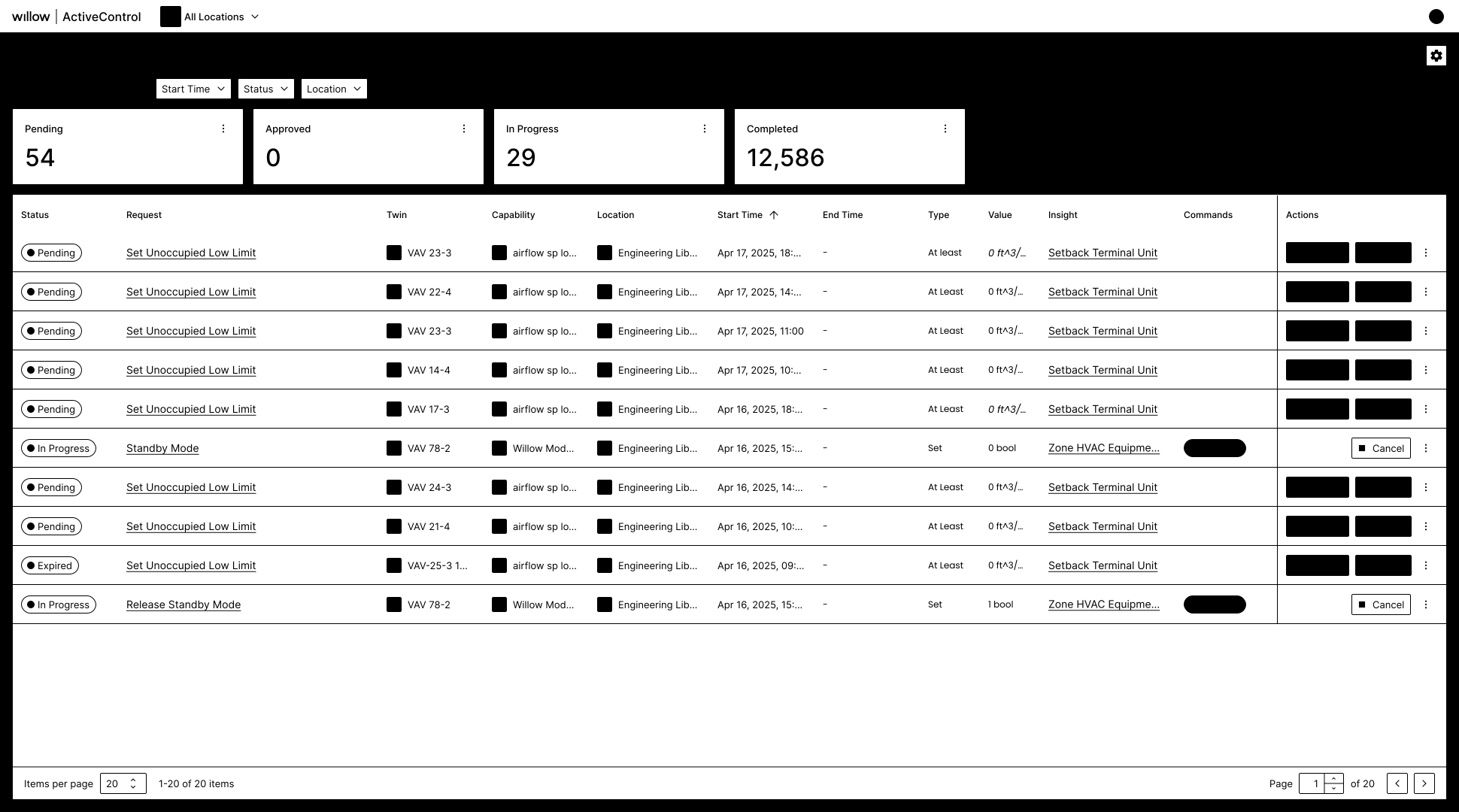
Traditional workflows for facility teams encompass work order generation, sending out technicians and then reviewing if the problem was resolved. To align with customer goals of improving operational efficiency, we envisioned Active Control.
This feature closes the loop by acting automatically while retaining a layer of supervision, essentially offering the best of both worlds. Operators set auto-approvals for routine, low-risk adjustments like resetting thermostats in unoccupied rooms. For higher-impact changes, they use manual checks or staged rollouts to monitor and confirm commands before applying them at scale. Fallback logic can protect in case certain commands do not achieve the desired outcome, hence maintaining system safety and reliability. This approach ensures that buildings stay responsive and adaptive, blending automation with accountability so the system automates optimizations with human oversight.
Closing Thoughts
The features highlighted above reflect what customer obsession looks like in practice at Willow. Each of these investments was inspired by conversations and operational needs in the real world. As facilities grow more complex and the demand for autonomous operations intensifies, the feedback loop between Willow and our customers becomes even more critical.
At Willow, our focus remains on prioritizing investments that resonate with customers. Customer obsession remains the cornerstone of Willow’s culture.