How Willow Accelerates the Future of AI Enabled Airports

Airports are entering one of the most transformative decades in their history. Passenger volumes are rising, operational complexity is increasing, and the pressure to deliver seamless, safe, and efficient travel experiences has never been higher. At the same time, Artificial Intelligence is rapidly reshaping how airports think about operations, infrastructure, and decision making.
In response to this shift, the Airports AI Alliance has emerged as a global coalition of airport executives, innovators, and technology partners committed to advancing responsible, effective, and scalable AI adoption across the aviation ecosystem. The Alliance brings together leaders from major hubs such as Dallas-Fort Worth, alongside technology partners building next generation airport platforms.
As airports explore AI-driven transformation, one challenge consistently rises to the surface: solutions and experiences are only as powerful as the underlying data foundation. A unified, contextualized, and trustworthy operational data layer is critical in delivering meaningful impact. This is where Willow plays a pivotal role.
Willow’s digital twin platform is built on semantic modeling, real-time data integration, and governance-first architecture. As a result, it is uniquely positioned to help airports unlock the full potential of AI. By creating a unified operational layer that connects systems, assets, workflows, and insights, Willow helps accelerate the AI journey and enables airports to operate with greater resilience and efficiency.
In this blog, we’ll explore how Willow can support Airports in their AI journey across five strategic dimensions: data unification, AI governance, predictive insights, cross-system interoperability with a rich Airport ontology, and decision intelligence for capital planning.
1. Building a Foundational Data Layer
Airports are among the most complex operational environments in the world. A single airport relies on a variety of systems including building management, industrial controls, and access control. Runways and airfields rely on lighting systems. Gates utilize passenger boarding bridges and apron management platforms, baggage handling systems ingest data from IoT sensors. Maintenance and asset management systems keep operations running, balancing efficiency with and energy and sustainability goals. Each of these systems generates data. If siloed, a fragmented operational landscape can make it challenging for AI models to have the context needed for autonomous Agentic workflows and generating recommendations.
Willow solves this by creating a unified semantic layer that normalizes data across systems, assets, and workflows.
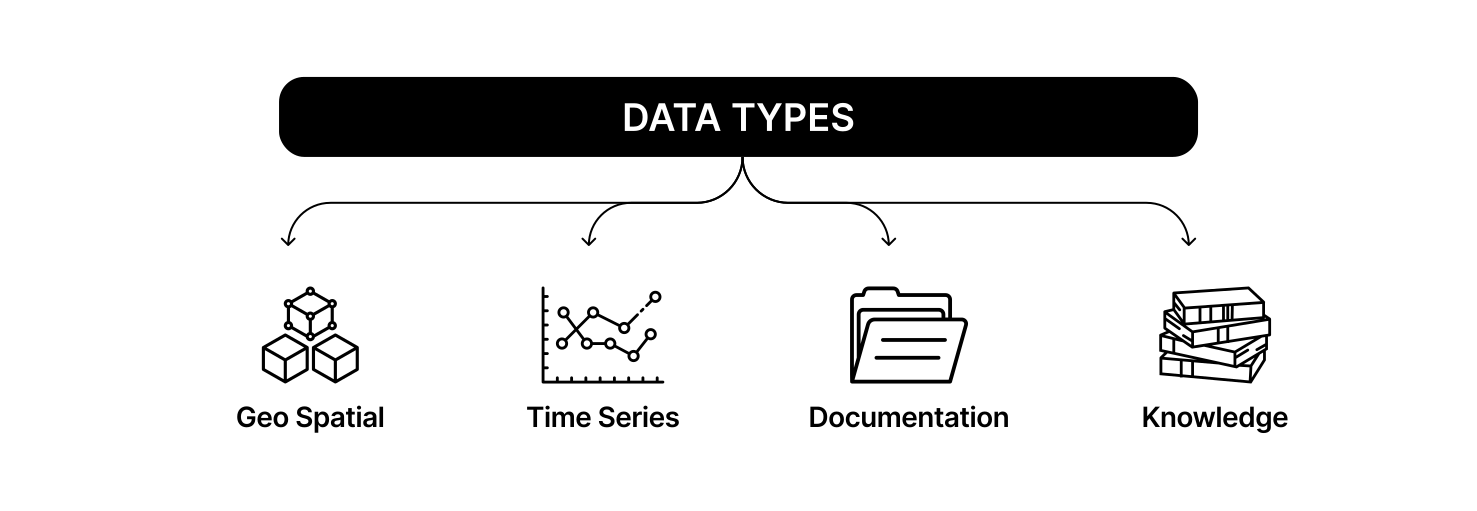
This unified data foundation becomes the backbone for AI-driven decision-making, relating assets to spaces with geo-spatial visualization, real time data streams, unlocking content buried in documents and bringing it all together in a Knowledge Graph. As a result, airports gain a real‑time, contextualized view of their entire operational ecosystem.
2. Delivering AI Governance and Safety Frameworks
Airports operate under intense regulatory scrutiny. Safety, security, and compliance are non‑negotiable. As AI becomes deeply embedded in airport operations, leaders must ensure that solutions are transparent, secure, and compliant.
This is one of the core priorities of the Airports AI Alliance and an area where Willow can provide value. Willow’s platform is built with governance at its core. It provides data lineage and traceability, access controls and role-based permissions, and audit trails. As an example, granular feature-level permissions support fine grained access control.
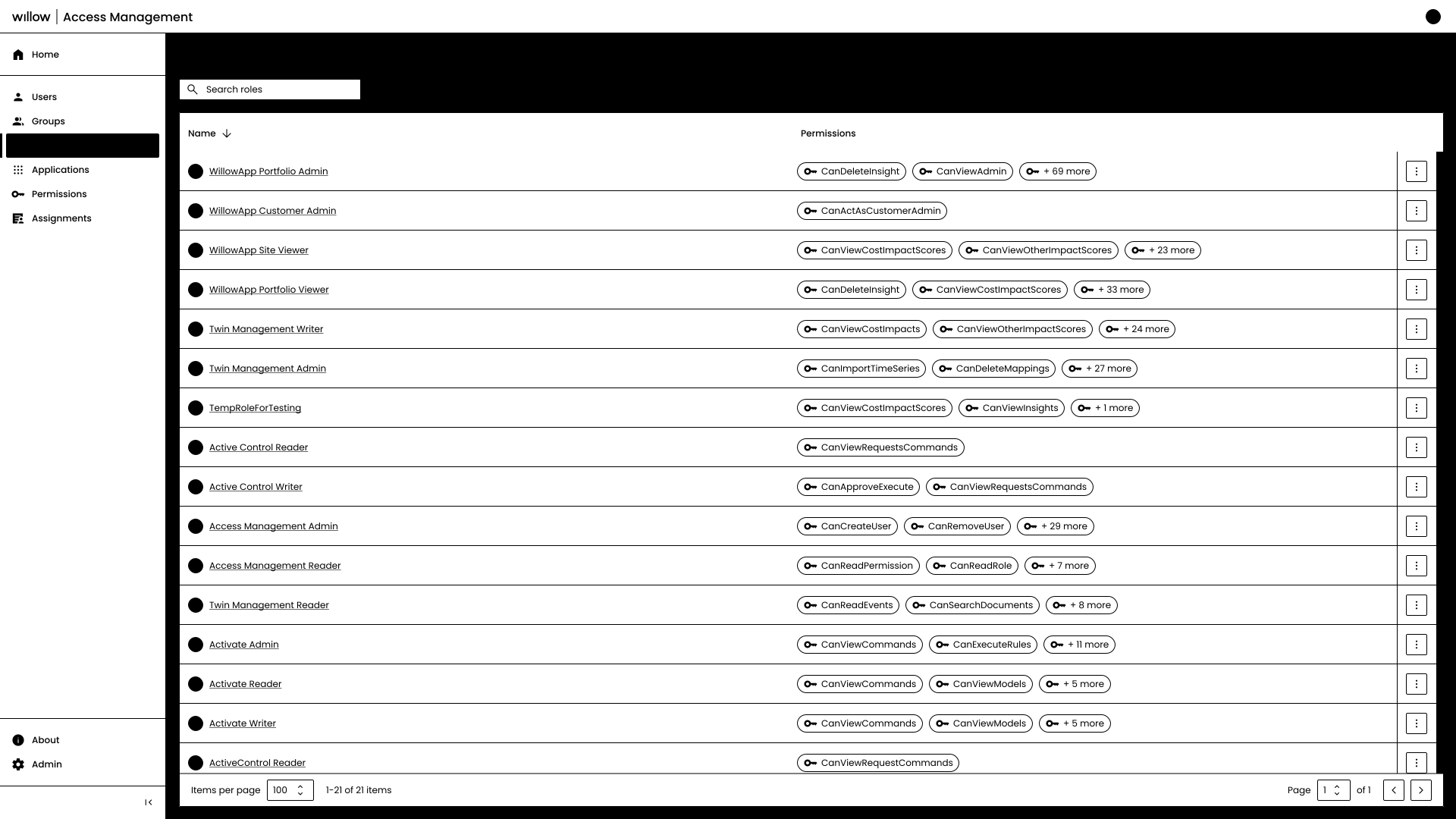
By embedding governance into the digital twin, Willow ensures that AI systems operate safely and responsibly. This gives airport leadership and stakeholders confidence that AI-driven decisions across maintenance, energy optimization, and gate operations, are grounded in trustworthy data and transparent logic.
3. Enabling Predictive Operations with Insights
Airports are under constant pressure to reduce delays, improve passenger flow, and optimize resource allocation. AI offers powerful tools to achieve these goals, when supported by high-quality, contextualized data that is processed in real-time to generate actionable insights.
With Willow as the operational backbone, Skills run continuously to unlock insights. By alerting facility teams early, Skills enable proactive intervention, reducing downtime and optimizing performance. As an example, Spike in Water Consumption – Potential Water Leak continuously analyzes water consumption data to flag unexpected spikes that often precede the discovery of leaks. This enables corrective action before property damage or excessive utility usage ensues.

Tickets can be generated and updated conversationally with AI, and predictive maintenance can be tracked to systems like plumbing, electrical, HVAC, and critical assets such as chillers, baggage conveyors, and airfield lighting. AI-driven analytics help teams understand the ratio of Preventive Maintenance to Corrective Maintenance.
Insights with the same root cause are combined and provide detailed recommendations on workflows that guide facility teams through optimal actions with real-time anomaly detection across building systems and operational equipment. Energy consumption is optimized based on occupancy, weather, and operational schedules. As a result, airports can evolve from reacting to anticipating issues, hence reducing downtime, improving safety, and enhancing the passenger experience.
4. Solving Interop with Airport Ontology
Interoperability is one of the most persistent challenges in airport technology. With dozens of vendors, hundreds of subsystems, and decades of legacy equipment, airports can face a challenge in integrating new technologies for scaled AI solutions.
Most technology providers focus on a specific sub-system like apron operations, baggage systems, or passenger analytics. This leaves an open challenge around managing the entire ecosystem.
Willow takes a system-driven approach. By leveraging semantic modeling and DTDL-based ontology, Willow creates a shared data model that standardizes how assets, systems, and relationships are represented. Willow’s ontology for airports (GitHub – WillowInc/opendigitaltwins-airport: WillowTwin open digital twin definition language (DTDL) ontology for airports) models key sub-systems and equipment across Passenger Boarding Bridges, Baggage Handling, Airfield Lighting and more.
This allows airports to digitally describe multiple systems within the airport in a single Knowledge Graph. Assets can be described in the graph with relationships to their locations and other equipment. The Map Viewer feature in Willow allows for visualization of assets nearby that have active insights. Workflow coordinators on facility teams can then combine these and assign them to a single technician, hence saving multiple trips.
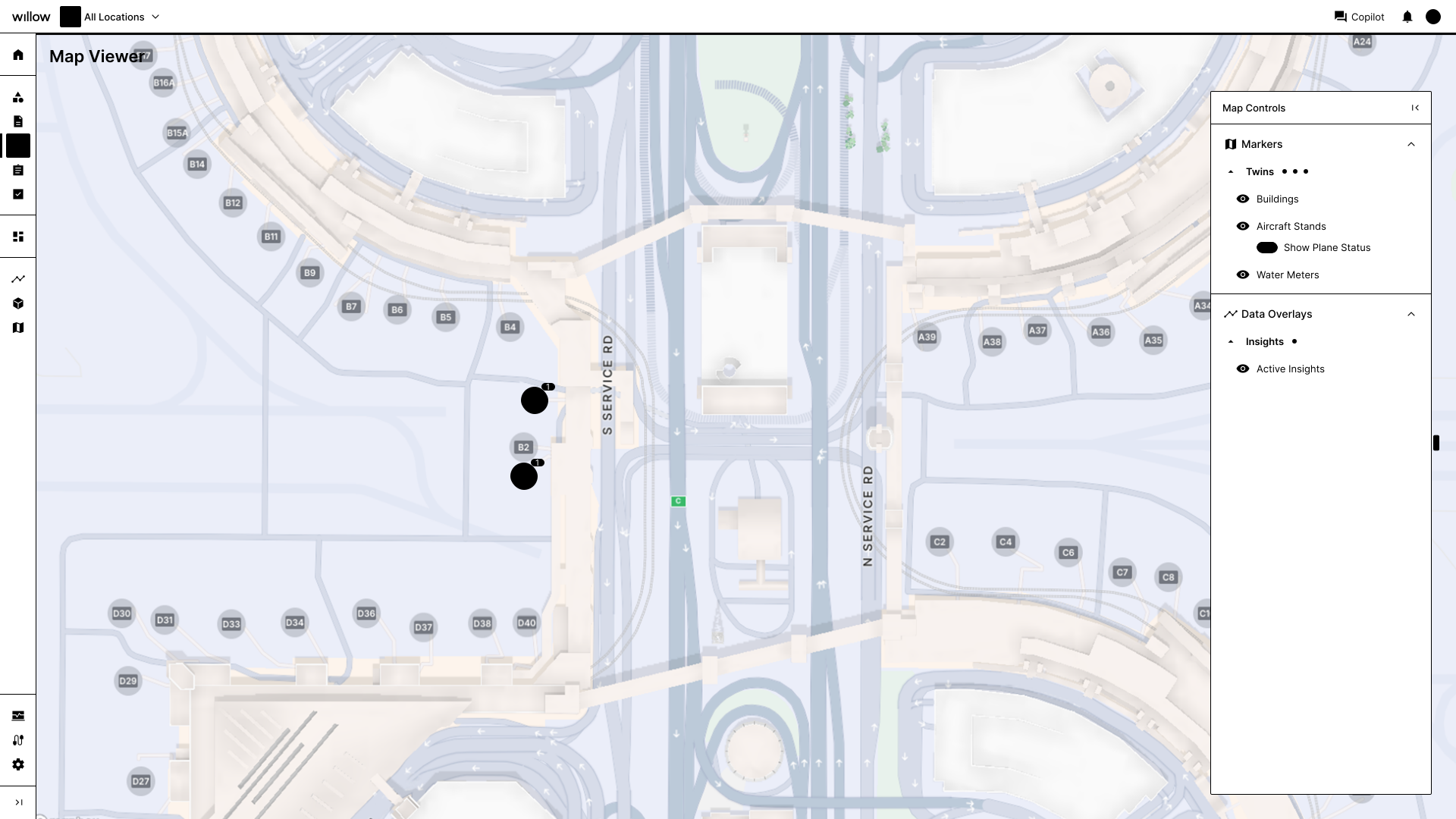
When real-time data flows through this digital layer, it breaks down silos across all sub-systems. This enables airports to integrate legacy and modern systems and map complex operational relationships. Cross-system reasoning allows for scalable AI solutions that work across the entire airport.
5. Providing Decision Intelligence for Capital Planning
Airport leaders and stakeholders expect real-time visibility into operations to understand where bottlenecks exist, and which assets are at risk of failure. A complete picture can illustrate how energy consumption is trending, where safety or compliance gaps exist, and how operational decisions impact cost, sustainability, and passenger experience.
Willow enables this through a single pane of glass and AI-drive Willow Copilot, a companion experience that makes it easy to conversationally understand how buildings are performing against operational efficiency goals, and what the ‘bad actor’ assets are across the entire portfolio to inform Capital Planning decisions.
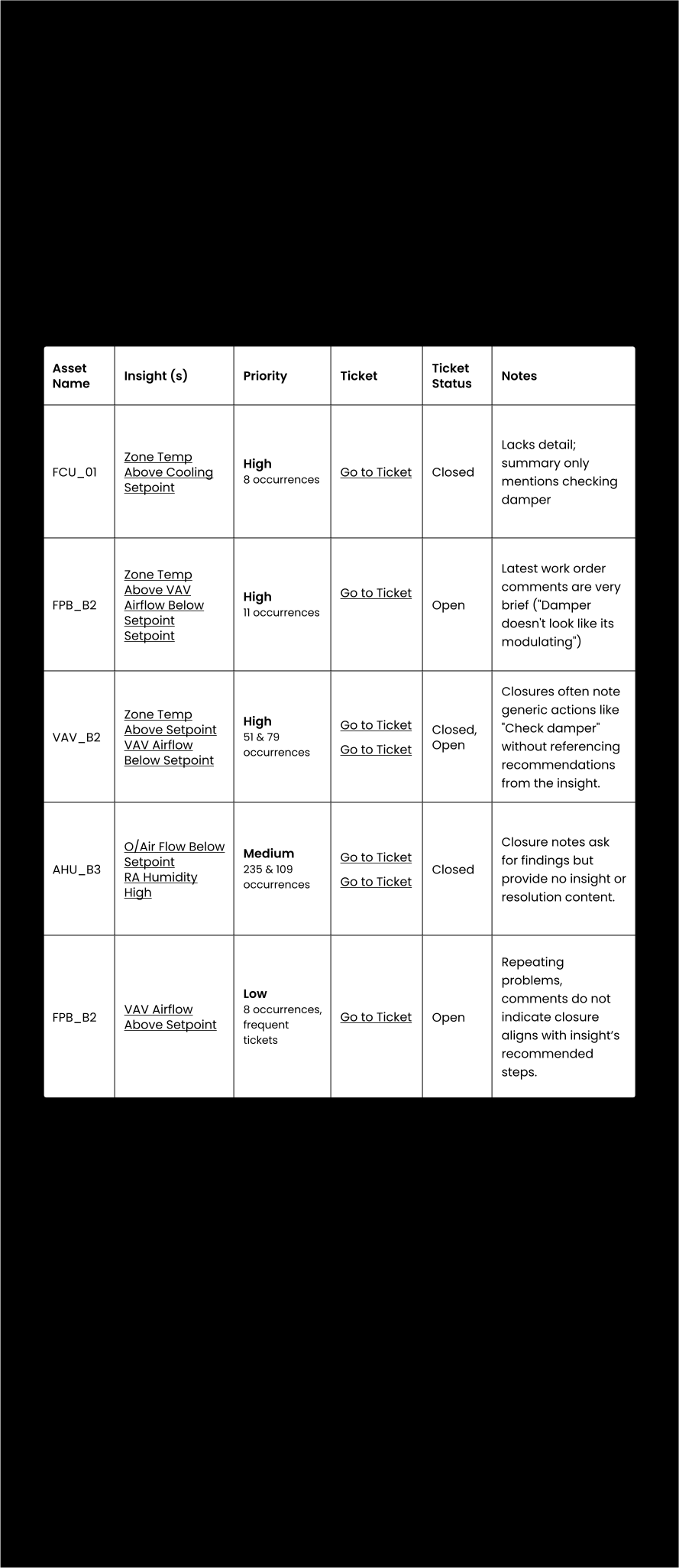
Willow paves the way for a dynamically generated Facility Condition Index (FCI) score by continuously integrating real‑time intelligence into operations, enabling faster, context‑aware decisions that adapt as conditions change.
Closing Thoughts
Airports are at a crossroads, with rising operational demands, increasing passenger expectations, and growing pressure to modernize infrastructure. AI offers a path forward to overcome the challenges of data fragmentation, governance, and interoperability. By providing a unified digital twin platform, governance first architecture, and interoperable data model, Willow can help airports unlock the full potential of AI.