Fire-Rated Building Management with Operational AI

Thousands of fire-rated building elements exist in a typical hospital, airport or university campus, yet organizations often struggle with instant access to information on which walls and doors are rated, and for how long. This visibility gap creates operational risk, compliance challenges, and uncertainty during emergencies.
Fire-resistance ratings are critical attributes of a building’s structure, ensuring safety with walls and doors designed to slow the spread of fire and smoke. Yet the information is often fragmented across construction drawings, inspection reports, and institutional knowledge. When an auditor requests evidence of compliance, when a facility manager needs to verify the rating of a specific door, or when a renovation project risks impacting a fire-rated wall, finding the right information can require hours of manual investigation. Further, an incorrectly replaced door or an undocumented modification to a rated wall can compromise the integrity of an entire fire zone.
Willow addresses this challenge by bringing fire-rated building elements into a structured operational model. Through a combination of ontology-driven asset modeling, spatially rich 3D visualization, and AI-powered Copilot experiences, Willow makes this information searchable and accessible. Teams can quickly identify rated doors and walls, verify fire-resistance limits and check for compliance from a single source of truth. Let’s explore each of these areas.
Ontology: Structuring Fire-Rated Building Information
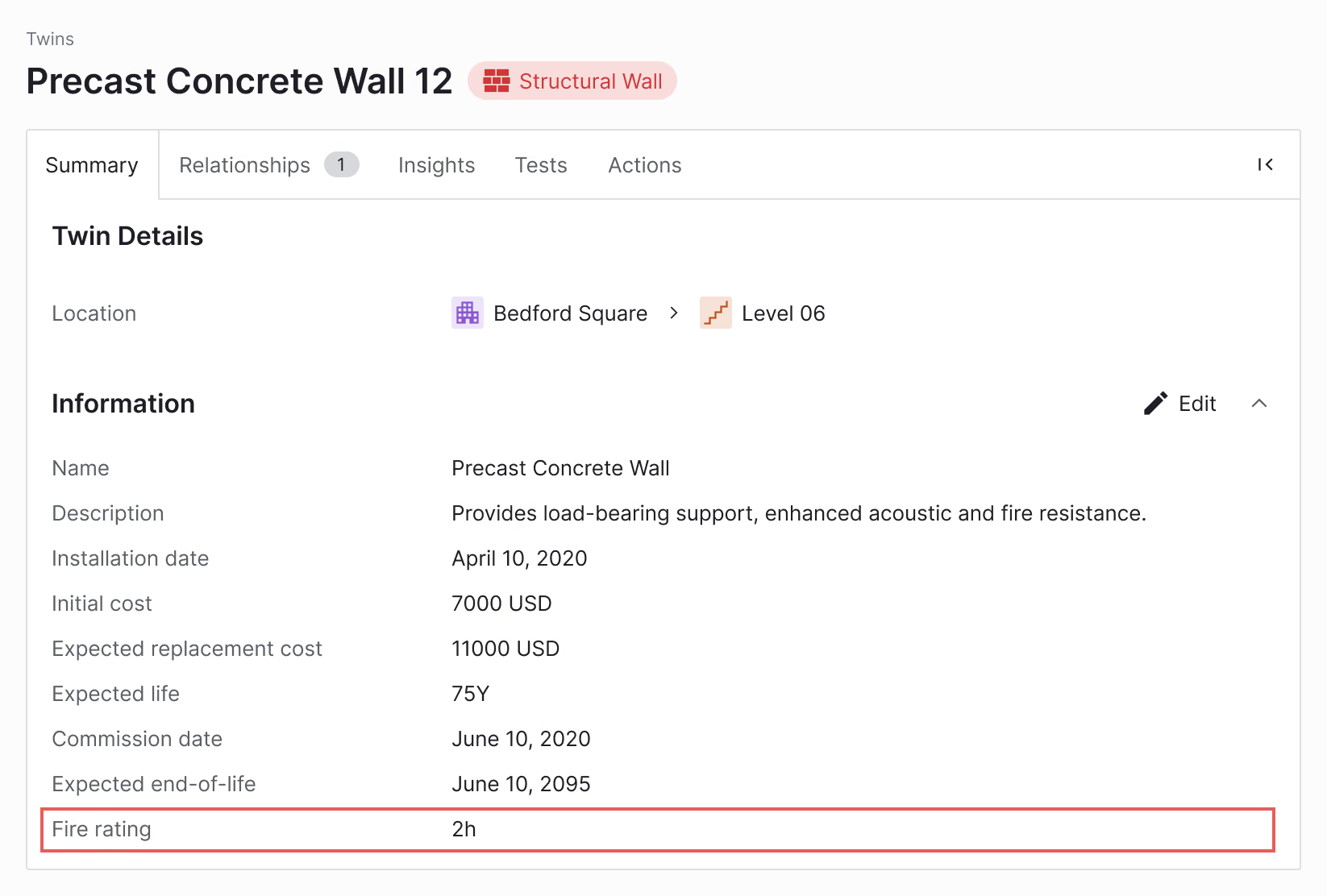
At the foundation of Willow’s approach is its ontology: a structured semantic model that defines how building assets, spaces, and systems relate to one another and how their attributes can be consistently stored, validated, and queried. Willow models the entire building including structural elements as twins with relationships in the Knowledge Graph. Each digital twin carries a set of properties, allowing for designated fire ratings to be captured as seen below for a wall.
Similarly, a fire-rated door becomes a data-rich twin in Willow, containing critical information such as fire-resistance rating, material, and dimensions.
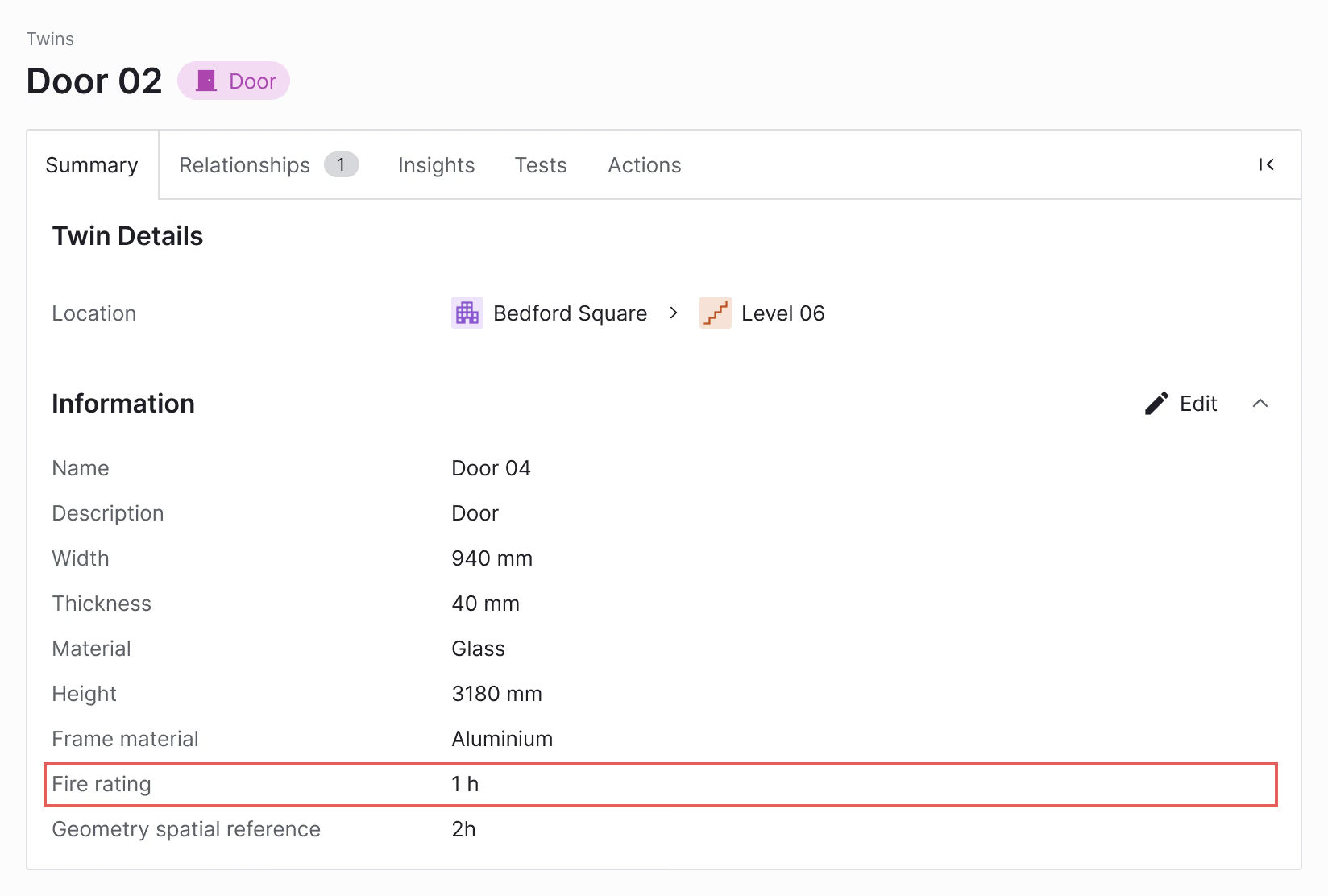
By embedding fire-rating data in the twin, Willow creates a source of truth that remains connected to the asset throughout its lifecycle. This eliminates one of the most persistent challenges in passive fire protection: critical fire-rating information becoming detached from its source and duplicated across disconnected systems that diverge over time. If a facility manager needs to verify whether a door carries a 1-hour rating or identify all 2-hour-rated walls within a particular fire zone, the information can be retrieved instantly.
The ontology also captures the relationships that define a building’s compartmentation strategy. Spaces, floors, zones, and structural elements can all be connected within a single contextual model. This allows teams to understand not only the rating of an individual asset, but also the role that asset plays in the overall fire-resistance strategy of the building.
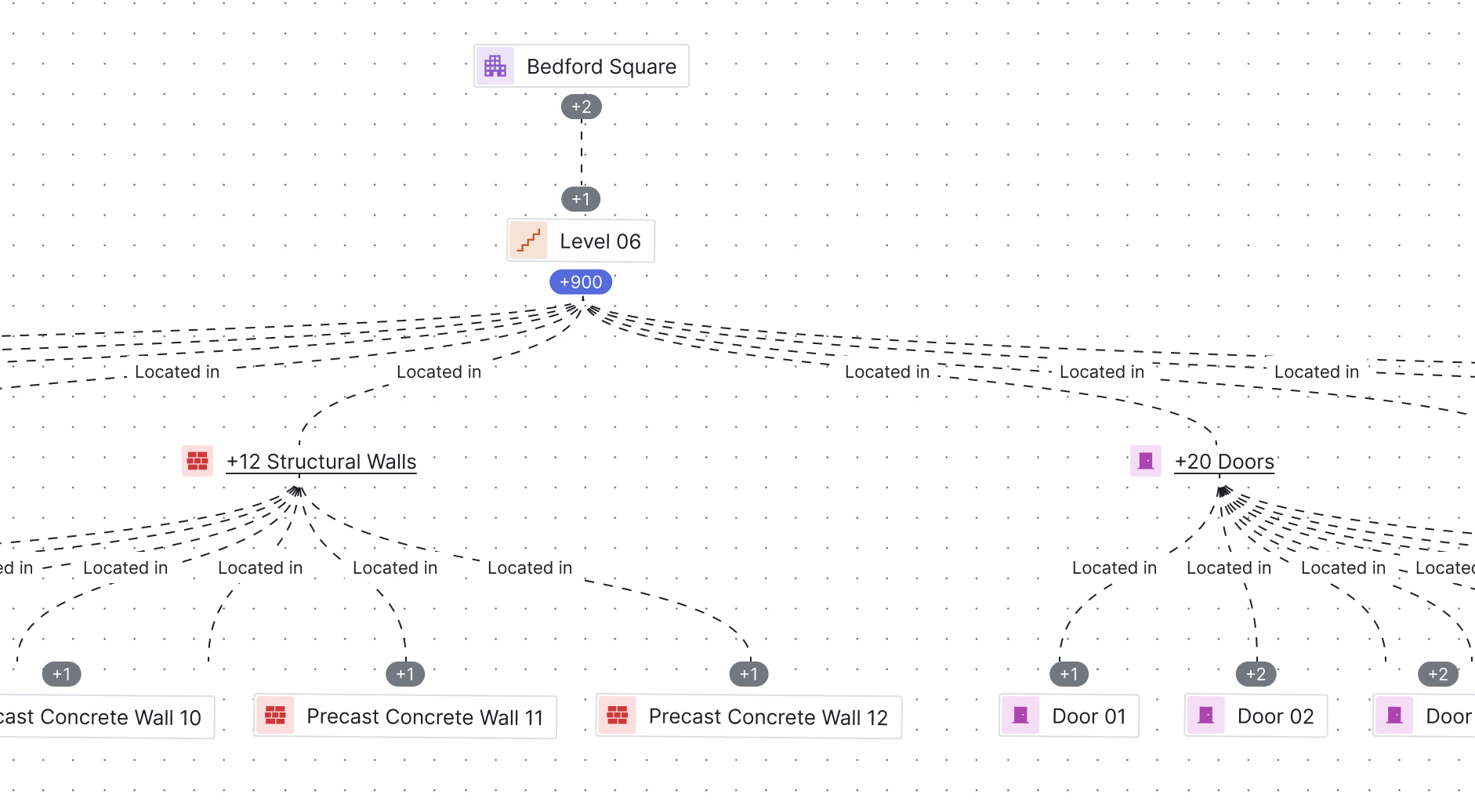
This relational approach becomes particularly valuable during renovations, upgrades, and maintenance activities. Teams can quickly identify which fire-rated elements may be affected by a proposed change and assess potential impacts on compartmentation before work begins. By grounding fire-rated building information in a structured ontology, Willow enables organizations to manage passive fire protection assets with greater accuracy, consistency, and confidence. The result is a trusted digital foundation for maintaining compliance, preserving compartmentation integrity, and ensuring that critical life-safety information remains accessible throughout the building lifecycle.
3D Visualization: Understanding Fire-rated Structures in Context
While ontology provides the data foundation, Willow’s 3D viewer provides visual context needed to make that information actionable. Teams can navigate across levels in the building and interact directly with fire-rated building elements and understand location relative to other structural elements and the building perimeter.
Dedicated visualization layers allow teams to isolate and analyze fire-rated building elements independently from other building systems. With a single click, users can focus on compartmentation features such as rated walls, fire doors, smoke barriers, and fire zones without the while hiding away details of mechanical, electrical, or plumbing systems.
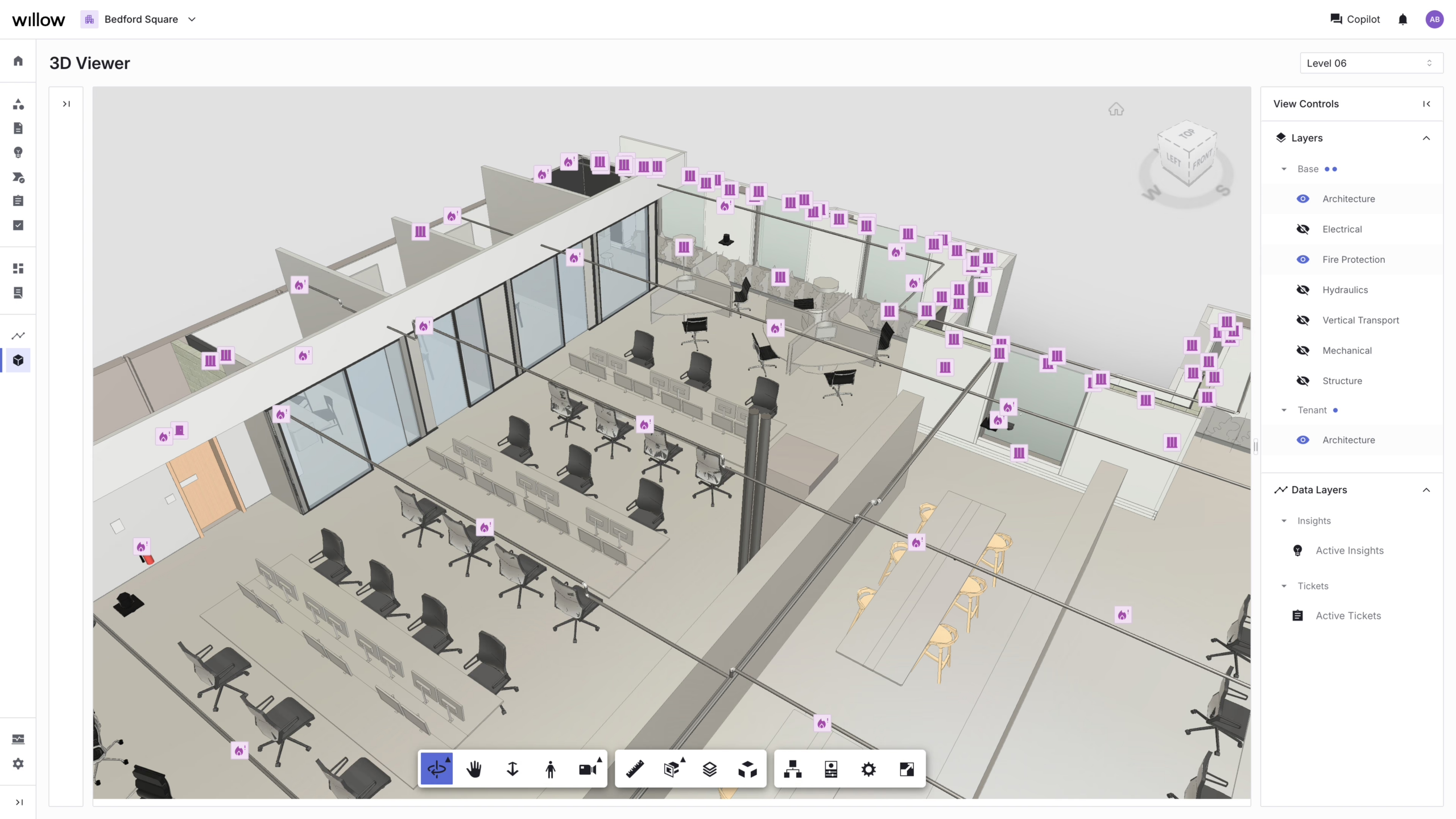
Willow makes it easy to select a fire-rated door, wall, or other structural element and instantly view its associated properties. The information is presented in context, showing exactly where the asset is located and how it relates to the surrounding building fabric.
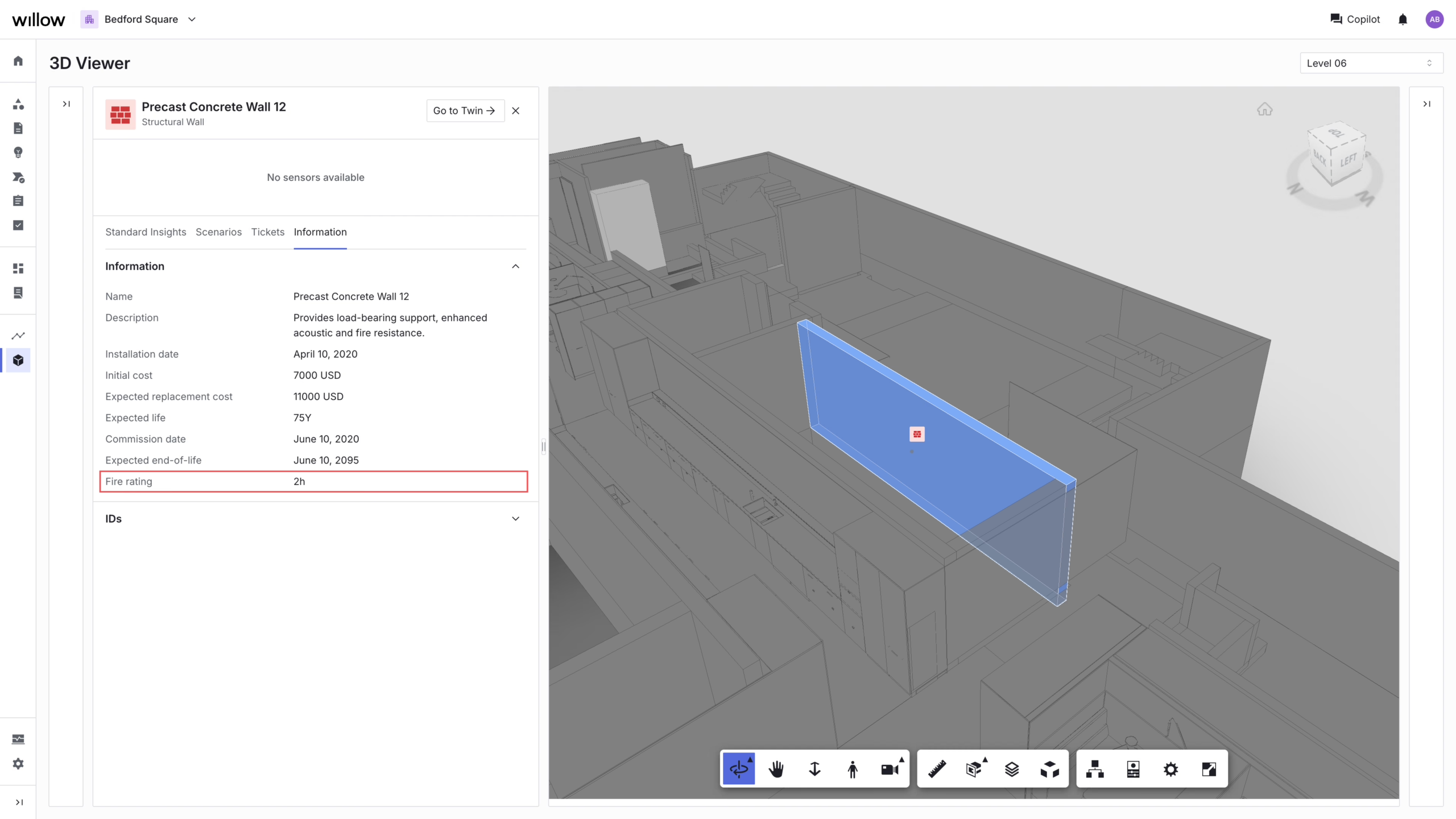
Spatial visualization enables teams to quickly identify where rated walls begin and end, confirm the locations of fire doors, and assess how compartments are configured across floors and zones. During inspections, audits, and compliance reviews, this visual understanding accelerates verification while reducing the risk of oversight. Renovations, maintenance activities, and tenant improvements can unintentionally affect fire-rated assemblies or compartment boundaries. By visualizing fire-rated assets alongside other building elements, teams can identify potential conflicts early and assess how proposed changes may impact compliance and compartmentation integrity before work begins.
The result is a fire-rating management environment that is both intuitive and operational. Organizations gain a spatially rich, interactive view of the fire-rated structures that protect occupants and property, making critical life-safety information accessible.
Copilot: Turning Fire-Rating Data into Operational Intelligence
Willow Copilot enables interaction with fire-rating information using natural language, making critical building data instantly retrievable for teams. A facility manager might ask, “What is the fire rating of this door?” or “Show me all two-hour-rated walls on Level 5.” Copilot retrieves the information directly from the Knowledge Graph, providing relevant information to build out reports for compliance or as a part of daily briefings for facility managers.
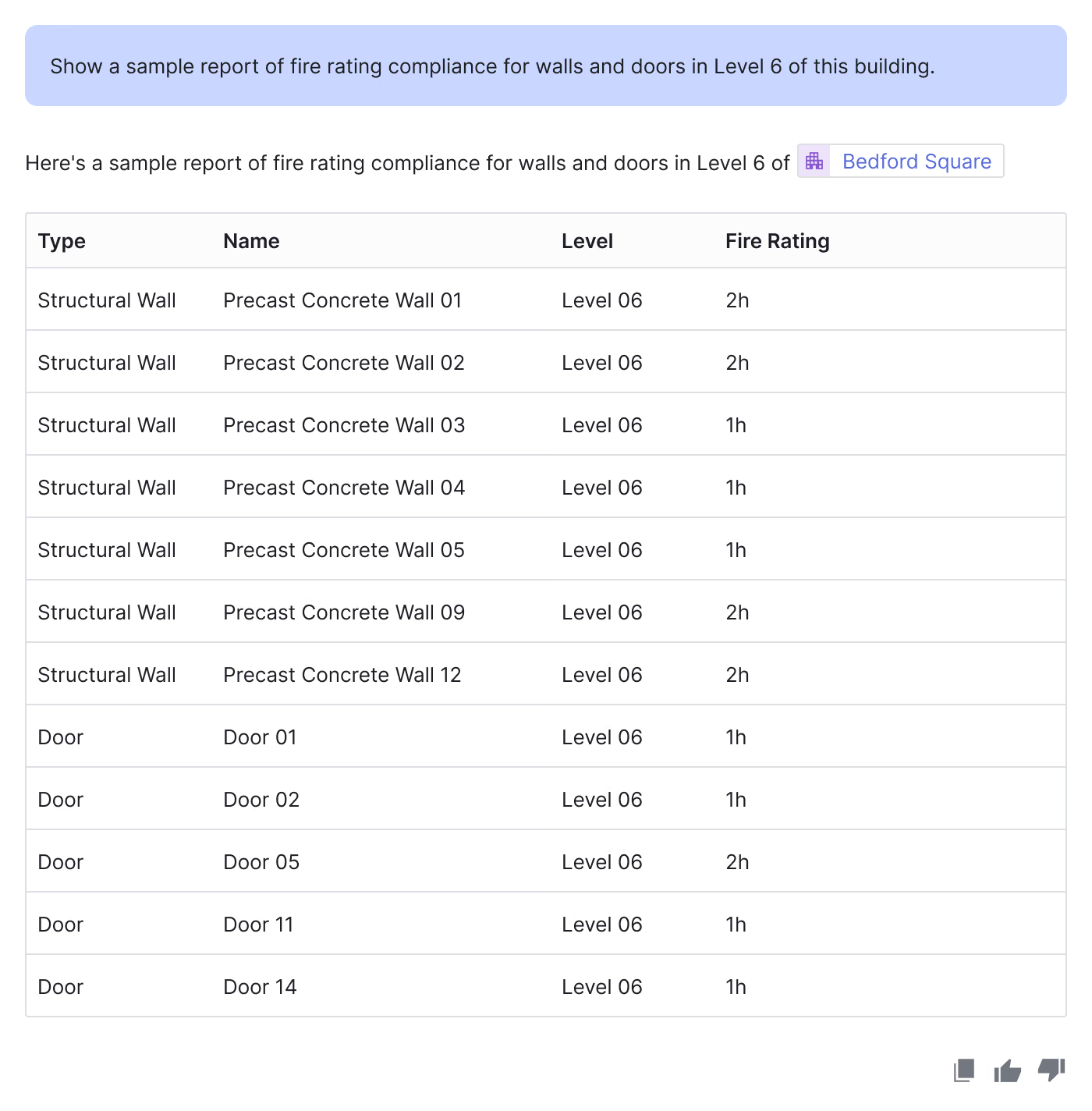
With streamlined compliance and reporting, teams can quickly identify all fire-rated doors within a facility, generate inventories of one-hour and two-hour-rated walls, or locate assets with missing or incomplete fire-rating information. During renovation projects, Willow Copilot can help teams understand which fire-rated elements are located within a proposed work area and identify areas that may be affected by design changes. During audits, it can provide immediate access to supporting information from the Knowledge Graph. During emergency planning, it can help teams quickly understand the fire-resistance characteristics of structural elements in a building.
By combining a structured ontology with AI-powered reasoning, Willow Copilot transforms fire-rating management from a reactive documentation exercise into a proactive operational capability. The result is faster decision-making, stronger compliance outcomes, and greater confidence in the building elements.
Conclusion
Managing fire-rated building elements has traditionally been a fragmented process. Willow brings scattered information together through a unified approach that combines ontology, 3D visualization, and AI-powered intelligence. By modeling fire-rated walls and doors as twins in the Knowledge Graph, organizations build a foundational source of truth. Through spatial representation, teams can understand these assets in terms of relative location to each other, and in context of the building architecture. With Willow Copilot, they can instantly access information, answer complex questions, and generate compliance reports and daily briefings without manually searching through documentation.
The result is a shift towards operational intelligence. Fire-rating information becomes searchable, visual, and actionable throughout the building lifecycle, from design and construction through maintenance, renovations, audits, and ongoing operations. In a world where the integrity of a single fire-rated element can impact safety and compliance of an entire building, access to accurate and trusted information is essential. Willow provides the visibility, context, and intelligence organizations need to maintain compliance, preserve compartmentation integrity, and manage fire-rated structures with confidence.