Dallas Fort Worth International Airport: Pioneering the Future of Airport Operations with Willow
Case Study
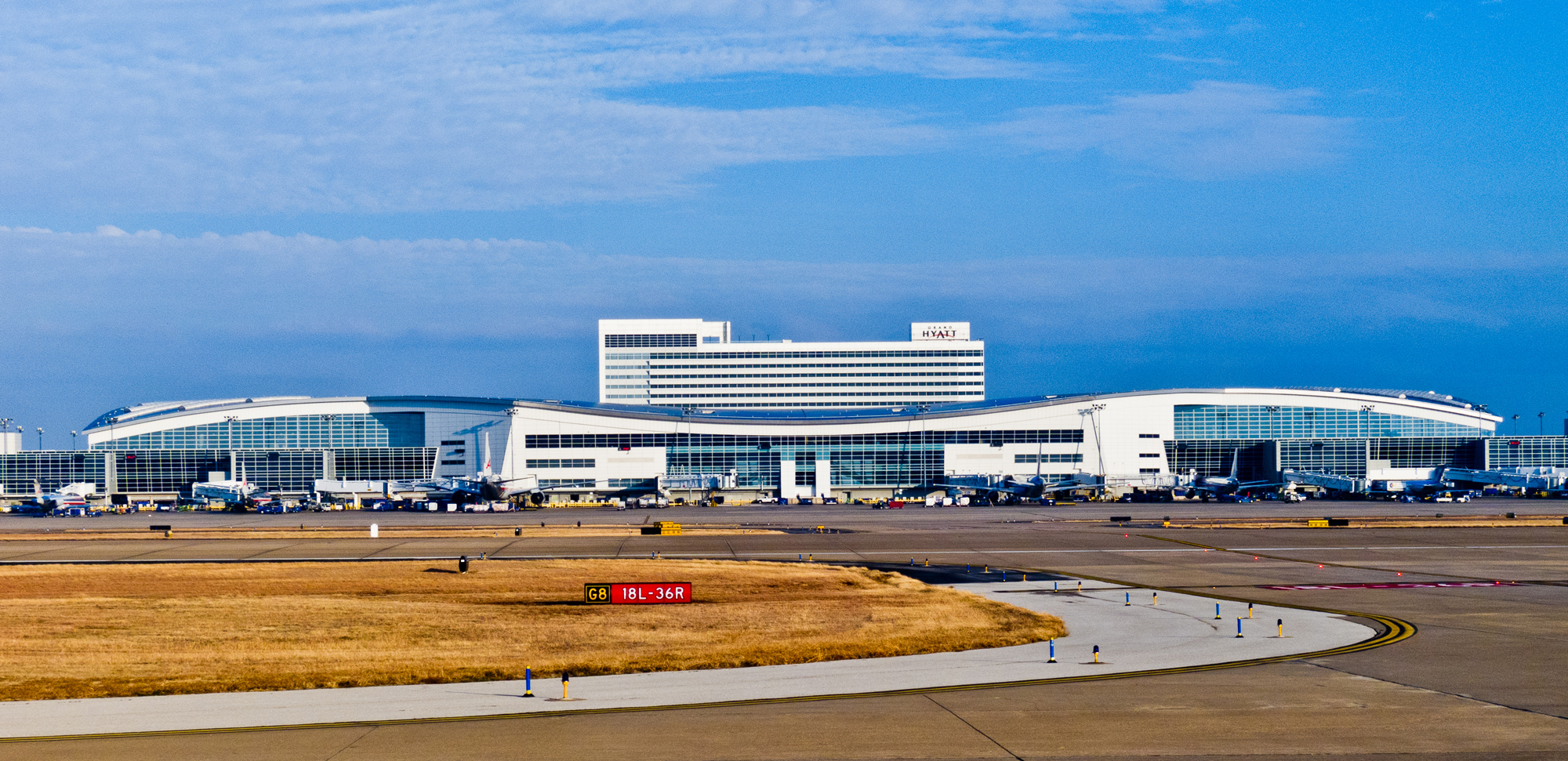
When Dallas Fort Worth International Airport (DFW) set out to transform its operations, they faced a major challenge: managing one of the world’s largest and busiest airports while preparing for exponential growth. Willow’s digital twin platform is enabling DFW to achieve operational efficiency, extend asset lifecycles, and make progress on sustainability initiatives. This progress has encouraged the airport to set an ambitious goal of reducing maintenance costs by 20-25% per square foot by 2030. Together, Willow and DFW are redefining what it means to operate a modern airport, setting a new standard for the industry.
Challenge
Unifying a Complex, Aging Infrastructure
Managing one of the busiest airports in the world meant grappling with a sprawling infrastructure of over 171,000 assets, operating across 27 square miles. Five separate building management systems (BMS) and three computerized maintenance management systems (CMMS) operated in silos. Maintenance teams relied on outdated, reactive processes—mostly addressing breakdowns only after they disrupted operations or inconvenienced passengers. This led to higher costs, fragmented data, operational disruptions, and frustrated travelers.
When something breaks, we rely on someone noticing and reporting it. That’s not sustainable, especially for an airport of our size and scale.”
Chris Poinsatte , CFO of DFW.
Jet bridges, HVAC units, moving walkways, and other critical systems came with their own challenges: varying installation dates, inconsistent maintenance schedules, and proprietary manufacturer systems. Without centralized oversight, predicting failures or standardizing repairs became a logistical nightmare.
Meanwhile, DFW’s operations depended on the institutional knowledge of long-tenured staff. As many near retirement—and without a system to codify their expertise—the risk of losing critical expertise loomed large, threatening to disrupt future workflows.
To realize its vision to “transform travel,” DFW needed a platform that could unify systems, deliver actionable insights, and empower teams to shift from reactive fixes to proactive, data-driven management.
Solution
Harnessing data to transform operations
DFW turned to Willow to revolutionize its operations. Leveraging AI-driven digital twin technology, Willow integrated live, spatial, and static data from over 171,000 assets into a unified knowledge graph. The platform then enabled real-time insights, predictive analytics, and automation capabilities to better manage the airport’s complex facilities.
Bill Grozdanich, VP of Controls and Analytics at DFW, highlights the benefits: “We’re starting to not rely so much on the customer or a stakeholder calling us that something is down. We’re starting to get data and information from sensors and assets saying, ‘Hey, this asset’s performing out of balance or out of tolerance, and it needs to be looked at before it actually fails.’”
We can actually know when or predict when something is going to break. We can schedule that maintenance at night when it doesn’t impact customers—and then, of course, that saves a lot of money.”
Chris Poinsatte , Chief Financial Officer, DFW.
Key components of the solution included
By integrating these systems into the digital twin, Willow enabled DFW with the comprehensive view, automation, and data-driven decision-making they needed to modify their approach to airport operations.
Efficiency, savings, and sustainability in action
The impact of Willow’s digital twin platform on DFW’s operations has been transformative:
Recognizing the potential of Willow, Poinsatte challenged his brightest, most conservative analyst to rigorously model the financial outcomes. “I want you to be really disciplined about this,” Poinsatte recalls telling him. “I want you to question everything.” The resulting analysis showed not only substantial cost avoidance but also environmental and operational benefits. This translated to substantial savings for both DFW and its airline partners. These insights encouraged DFW to establish an ambitious target of reducing maintenance costs by 20-25% per square foot and help DFW on its goal to achieve carbon net-zero by 2030.
Creating a blueprint for airports worldwide
Willow’s platform has changed how DFW’s facilities teams operate. Maintenance schedules are being optimized for off-peak hours, and facilities managers can now predict asset failures before they happen—minimizing airport disruptions and keeping critical infrastructure functional. Maintenance teams can also verify that the work performed directly resolves the issues detected in live system data, creating a powerful feedback loop where data validates performance improvements. This maximizes efficiency and ensures every site visit delivers measurable results. Furthermore, by codifying institutional knowledge into Willow Skills, Willow helps DFW preserve continuity as experienced staff retire.
DFW’s partnership with Willow is enabling the airport to “transform travel.” As DFW continues to innovate, its success serves as a blueprint for other airports worldwide, and their data-driven approach has positioned DFW as a leader in airport innovation and sustainability. Through the partnership, DFW and Willow have built the necessary integrations for legacy systems, making it easier for other airports to replicate their success using the same technological advancements.
For other airports considering digital twin technology, we’ve got to find a better way to operate our facilities. This is the way.”
Bill Grozdanich , Vice President of Controls and Analytics, DFW.
Discover how DFW is using Willow Copilot, the AI assistant for the built world, to transform their operations.