Managing Units with Willow
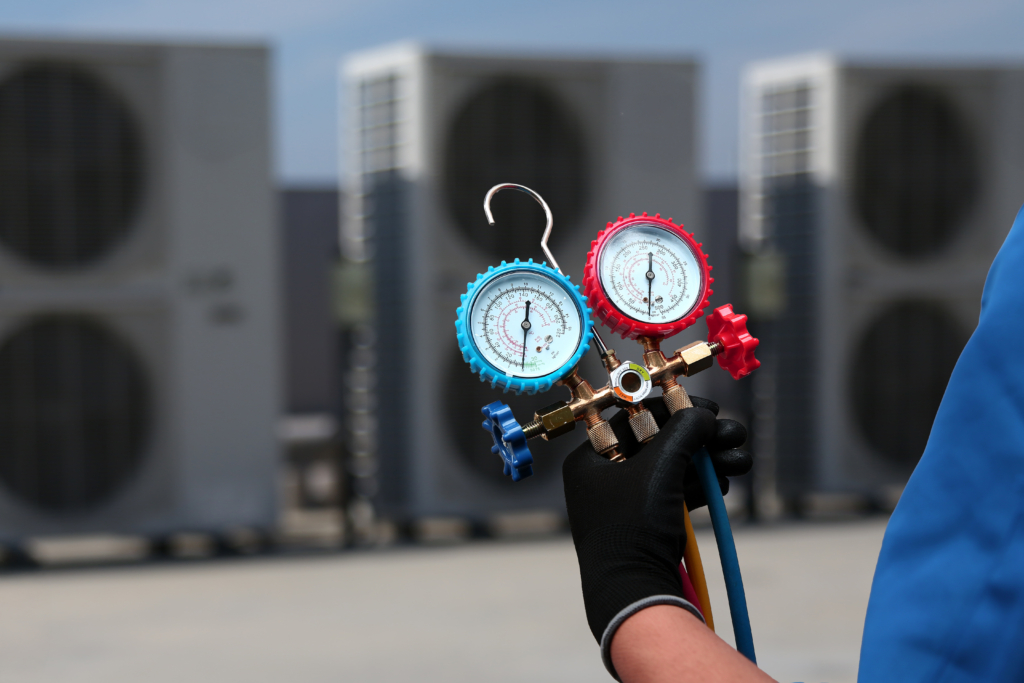
In the modern world of building management, data is the currency of operational excellence. Raw sensor values, thresholds, setpoints, and insights all flow through a digital environment powered by IoT and analytics. The value of this data hinges not just on its accuracy, but also on its context, and especially its units of measurement.
The Importance of Managing Units
With a robust strategy for unit management, organizations get ahead of challenges with sensor readings and erroneous calculations. In modern buildings, devices and systems come from a myriad of manufacturers, each with their own native units. Subsystems such as HVAC, refrigeration, lighting, and access control may use different conventions within the same building. The resulting mix of units such as PSI and kPa, °F and °C, or ft/s and m/s can lead to a data ‘Tower of Babel’ if not carefully managed. Accurate conversions, normalization, and labeling are essential for data integrity. This is particularly important when aggregating and automating building performance metrics and insights worldwide.
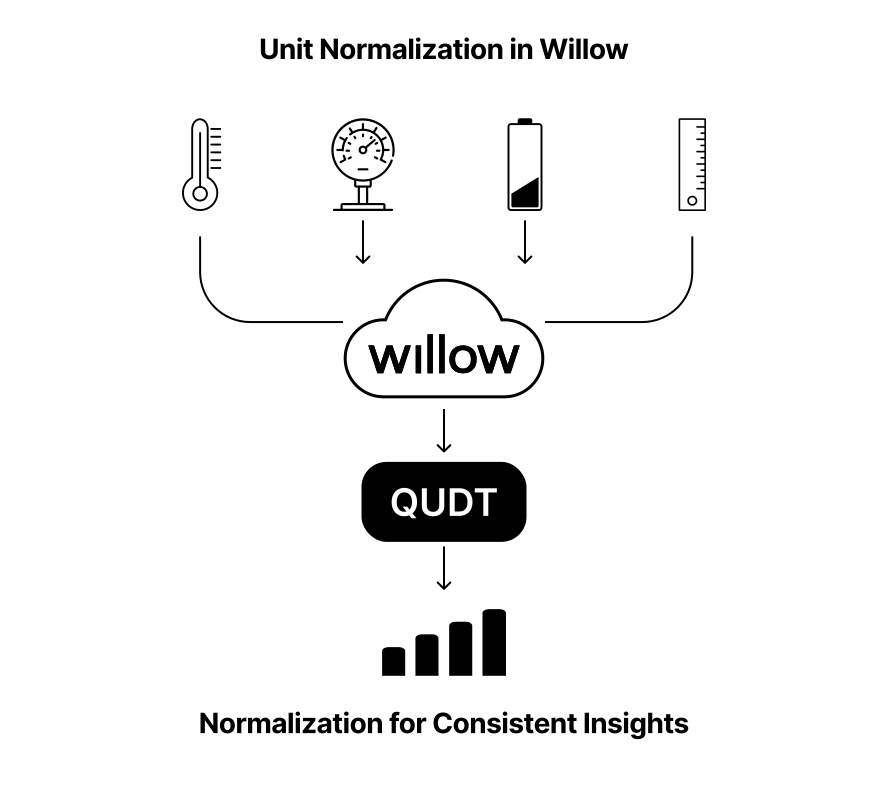
It is within this context that Willow built a unit management engine to normalize units leveraging QUDT (Quantities, Units, Dimensions, and Data Types), an open standard providing a comprehensive ontology for quantities and their possible units. This enables a scalable framework for all analytics. As a result, organizations can normalize and convert units unambiguously across workflows.
QUDT: The Foundation for Modern Unit Management
QUDT is an internationally recognized open-source knowledge base for representing units of measure and physical quantities. It was first developed for the NASA Exploration Initiatives Ontology Models (NExIOM) project at Ames Research Center. It has since evolved into a public, open-source resource maintained by a board of directors from multiple organizations as QUDT.org.
This standard defines thousands of units and dimensional relationships. The extensive taxonomy covers standard, derived, and custom units used in industry. By referencing QUDT, platforms like Willow gain a universal mechanism for describing the value, precise unit, physical dimension and transformation rules.
Willow’s Approach
- Unit Normalization: Telemetry sources may produce values in various units. Willow uses QUDT identifiers, also known as URIs, to tag each value with its source unit and quantity kind.
- Standardized Storage: All data in Willow is stored with an associated QUDT reference, so that downstream analytics always have access to the explicit unit details.
- On-the-fly Conversion: QUDT’s classification provides the structure for the Willow to carry out conversions to match the input values or the customers defined preference.
- Interoperable Reporting: Through QUDT, Willow normalizes unit symbols, ensuring that all stakeholders, whether using metric or imperial, can receive clear figures.
The End-to-End Process
Let’s walk through the process of how unit management works in Willow as data is normalized and processed in Skills to generate Insights.
-
- Source Data Collection and Tagging
Willow ingests telemetry and metadata from a wide variety of sources, spanning Building Management Systems, IoT devices, meters, and more. Willow’s architecture includes Mapped, an industry-leading connectivity and data management platform. Our deep partnership enables customers to achieve value immediately through a consolidated platform, communicating with the source systems on the Edge and in the Cloud. Each data point received is accompanied by metadata specifying its origin and, crucially, its unit of measure. For devices using open protocols such as BACnet, Modbus, OPC UA, units are parsed from the configuration or raw data stream. Proprietary integrations may require a mapping process to assign the correct unit based on manufacturer documentation. Every quantity is a value paired with an explicit unit code, such as QUDT’s KilowattHour or Degree_Celsius. This pairing is stored from point-of-ingest, allowing the full data lineage and facilitating traceability. - Digital Twin Modeling and Annotation
Willow models each asset and telemetry point in its ontology to support different systems of units. For example, the Supply Air Temperature of an Air Handling Unit is annotated as a temperature, with the system capable of handling both °F and °C as incoming data units. If a control point is migrated from one system to another or replaced with a new sensor, Willow’s QUDT-backed schema prevents errors from the moment data enters the system through all downstream computation. - Unit Conversion Logic and QUDT Mappings
Whenever data is analyzed, Willow uses the QUDT conversion framework to ensure consistency. For basic units, this may involve multiplying by a factor, such as converting gallons to liters, or including an offset, such as converting °F to °C. These mappings are sourced from the QUDT ontology. This approach is scalable and robust against human error. - Analytics, Insights, and KPIs
When calculating KPIs or benchmarks, Willow’s Activate Technology leverages QUDT to ensure that calculated values remain meaningful. For example, summing electric consumption from devices reporting in kWh and MWh is seamless, as all values are normalized to a standard base unit to report the annualized Energy Unit Intensity in kBtu/ft2 . Similarly, Comfort Score in Willow is computed by normalizing Zone Air Temperature and setpoints before calculating the percentage of times temperature remains within range over a period of time. - User Experience and Preferences
Willow allows selection of preferred units for a range of measurable quantities. Defaults such as °C vs. °F can be specified through App Preferences at a user level. All displays, trend charts, and exports convert and present values in the selected units, leveraging the QUDT-backed logic. This preference mapping extends to multi-national portfolios, where teams in different regions see data in locally relevant units while analysis and data science functions can work in SI base units for consistency.
- Source Data Collection and Tagging
Closing Thoughts
By standardizing to the QUDT system and creating a robust conversion engine, Willow delivers trusted analytics built on a foundation of normalized data. KPI reporting is consistent and accurate. Global deployments are seamless for customers with international locations, with support for both metric and imperial conventions. Vendor and hardware interoperability is ensured by integrating a myriad of data sources, regardless of native units. Willow continues to update its QUDT vocabulary and conversion routines as new units, sensor types, and standards emerge.
Powered by QUDT, Willow ensures that the platform is consistent for digital transformation of facilities and infrastructure. This approach supports Willow’s vision as a unified, trustworthy single source of truth for the entire building, campus, or portfolio, unlocking optimal operation, energy savings, and data-driven decision-making.