Willow Skills and Insights

In modern building management, Willow offers Skills, intelligent rules that monitor and analyze asset performance. Insights are the actionable results these Skills generate. Together, they are vital for identifying issues or optimizing operations, and ensuring a safe, efficient environment. Buildings can now evolve from reactive monitoring, overcoming challenges like missed inefficiencies and delayed responses to equipment faults.
Willow integrates data from a myriad of complex building systems like HVAC, electrical, water, energy, and IoT into a unified, actionable environment. Skills enable conversion of this data into action. Skills dynamically monitor systems, generating Insights that can represent everything from comfort concerns to critical failures. Skills run continuously and monitor the environment, surfacing issues and opportunities in a predictive or real-time manner. The wide range of Skill types within Willow reflects the complexity of modern buildings. Some Skills are engineered for immediate alarms and fault detection, while others focus on optimizing comfort, data quality, design compliance, energy conservation, and even predictive failure prevention.
Let’s explore ten key categories of Skills to understand their operational focus, value, illustrated with practical examples:
1. Fault Detection Skills
Fault Detection Skills are designed to continuously monitor operational data and sensor outputs, identifying abnormal conditions or performance issues that indicate equipment faults. These Skills enable early intervention by detecting deviations such as failure to meet setpoints, temperature anomalies, valve or damper malfunctions, and inconsistent feedback signals across HVAC, electrical, plumbing, and other critical building systems. As the linchpin of building reliability, these Skills help detect component failure, stuck actuators, sensor errors, or other faults. Rather than requiring operators to manually analyze trends or alarms, Fault Detection Skills automatically flag actionable issues, directing attention to the right equipment at the right time.
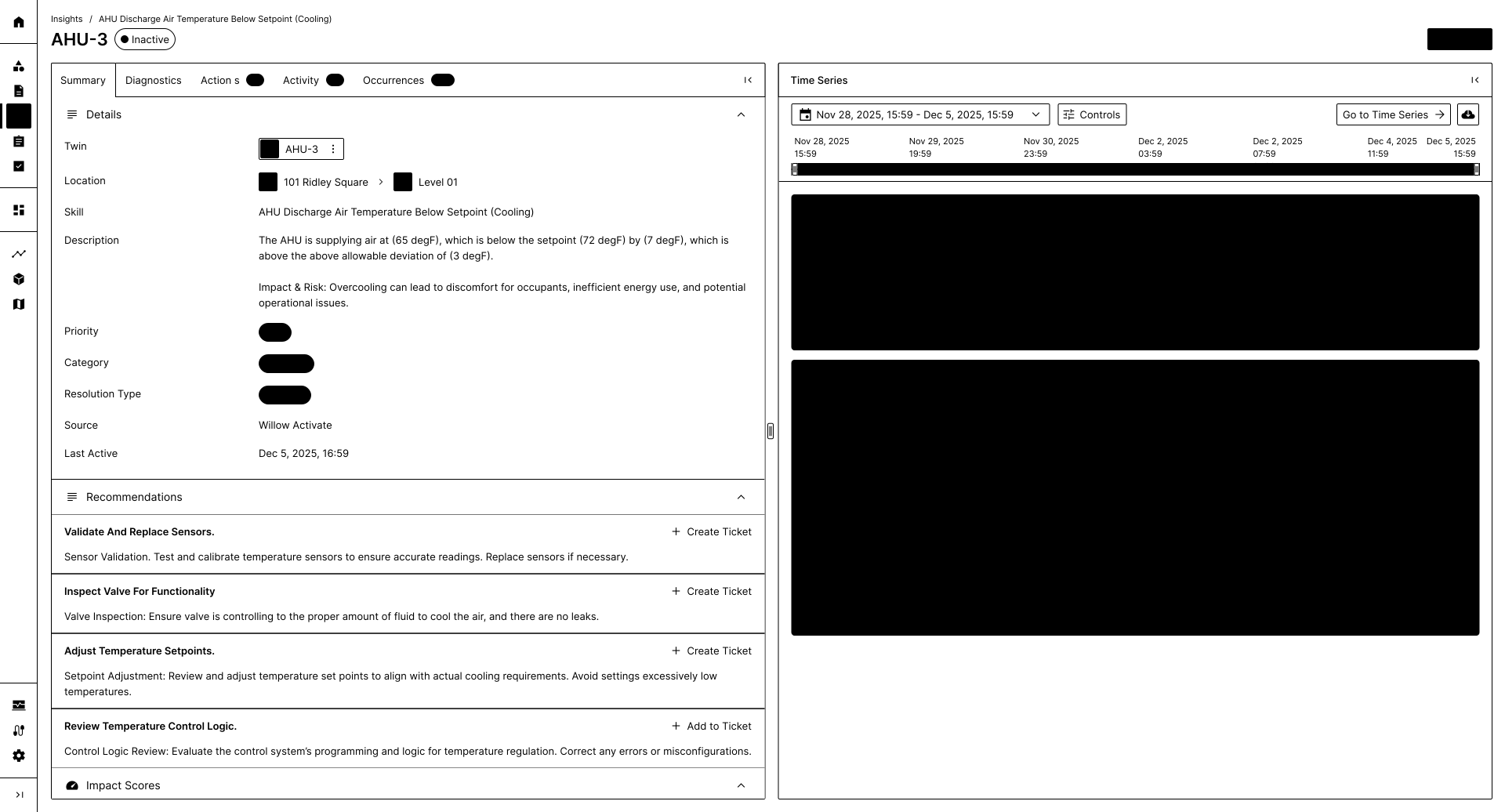
Examples include AHU Discharge Air Temperature Below Setpoint (Cooling), a skill that detects when an Air Handling Unit (AHU) fails to deliver cooled air at the expected temperature despite a call for cooling, possibly identifying problems with a cooling coil, valves, or sensor calibration. Recommended action directs the facilities team to investigate equipment ‘faults’ through sensor validation, control logic review, valve inspection, setpoint adjustment and more.
Similarly, Terminal Unit Airflow Recorded with Damper Closed flags the impossible scenario of recorded airflow in a VAV box when its damper should be completely shut, indicating sensor miscalibration or mechanical failure. In this case, the insight may recommend verifying airflow sensor accuracy, inspect damper for obstructions or mechanical issues and confirm actuator functionality.
2. Predictive Skills
Predictive Skills move beyond fault identification to anticipate issues before they become failures. These Skills look for abnormal patterns or deviations that signal a likely future fault, efficiency opportunity, or maintenance need. They analyze historical and real-time data to identify emerging trends or abnormal patterns likely indicative of developing problems before they impact building operation or occupant comfort. As a result, these Skills facilitate transition from reactive maintenance. By alerting facility teams early, predictive Skills enable proactive intervention, reducing downtime and optimizing performance.
As an example, Spike in Water Consumption – Potential Water Leak continuously analyzes water consumption data to flag unexpected spikes that often precede the discovery of leaks. This enables corrective action before property damage or excessive utility usage ensues.

Other predictive Skills may monitor equipment run hours, filter pressure trends, pump vibration, or switch cycling rates to forecast impending maintenance needs.
3. Condition-Based Skills
Condition-Based Skills create a bridge between reactive response and predictive foresight as facilities transition towards condition-based maintenance strategies. They are designed to trigger when early signs of equipment deterioration, wear, or operational drift are detected such as increasing filter differential pressure or gradual deviation in fan speed. Rather than waiting for failures, these Skills enable planned maintenance at optimal intervals.
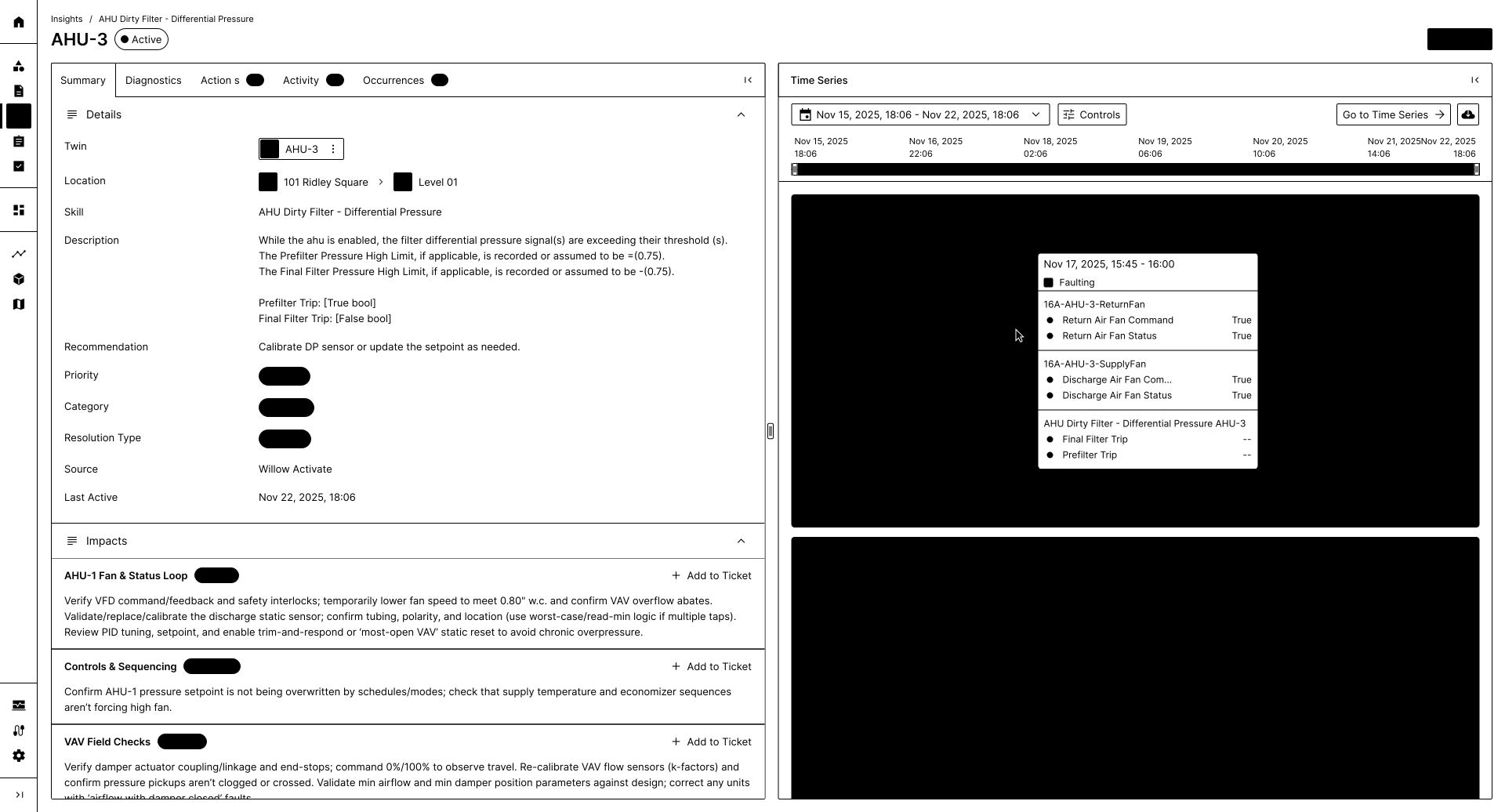
As an example, a Condition-Based skill AHU Dirty Filter – Differential Pressure could monitor filter pressure drop across an AHU, raising a maintenance insight when it reaches a threshold (but before reaching the critical limit). This minimizes filter failures and maintains indoor air quality.
4. Alarm Skills
Alarm Skills are fundamentally about urgency and safety. These rule sets detect when system states match critical or hazardous alarm conditions like freezing, excess heat, smoke, or equipment shutdowns. Insights are generated when an asset or system enters an alarm state or when a defined alarm condition is detected in building automation, HVAC, refrigeration, or related systems. Alarm Skills often monitor points such as high/low temperature, freeze conditions, shutdown events, or other critical thresholds, alerting operators to issues that require immediate attention.
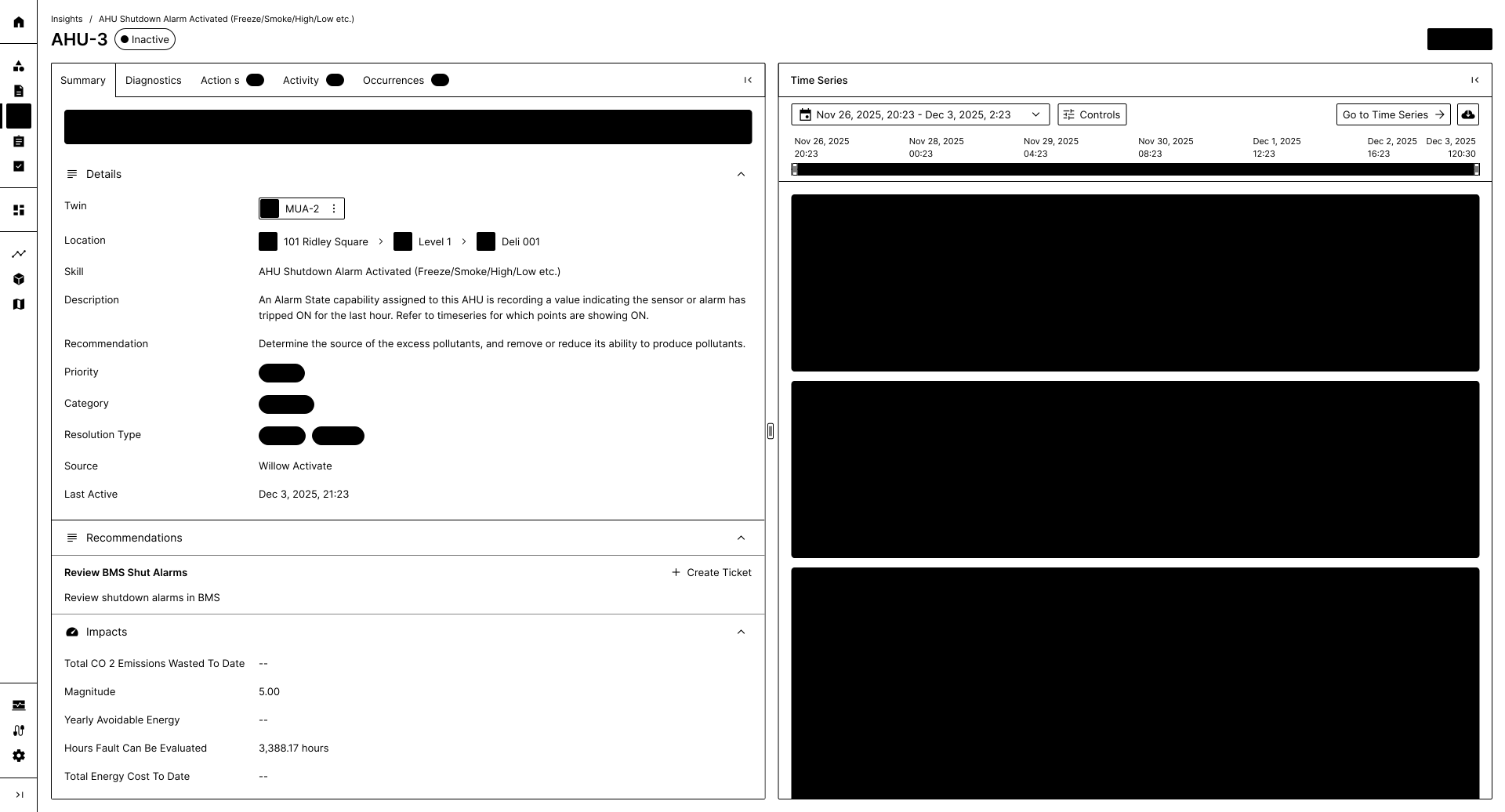
Examples include AHU Freeze Alarm Activated which notifies operators if freeze protection is triggered. This is critical for preventing costly coil or unit damage. Similarly, AHU Shutdown Alarm Activated flags emergency shutdowns due to hazardous or system-defined alarm events.
5. Comfort Skills
Comfort Skills maintain the essential promise of occupant experiences. They target factors such as temperature and humidity to ensure that environments remain within predefined comfort boundaries for productivity and well-being. By analyzing telemetry and control data such as zone temperatures, humidity, airflow, and setpoints, these Skills detect conditions that are likely to impact the comfort of building occupants. When conditions such as too hot, too cold or insufficient airflow are detected, Comfort Skills generate actionable Insights to guide corrective actions.
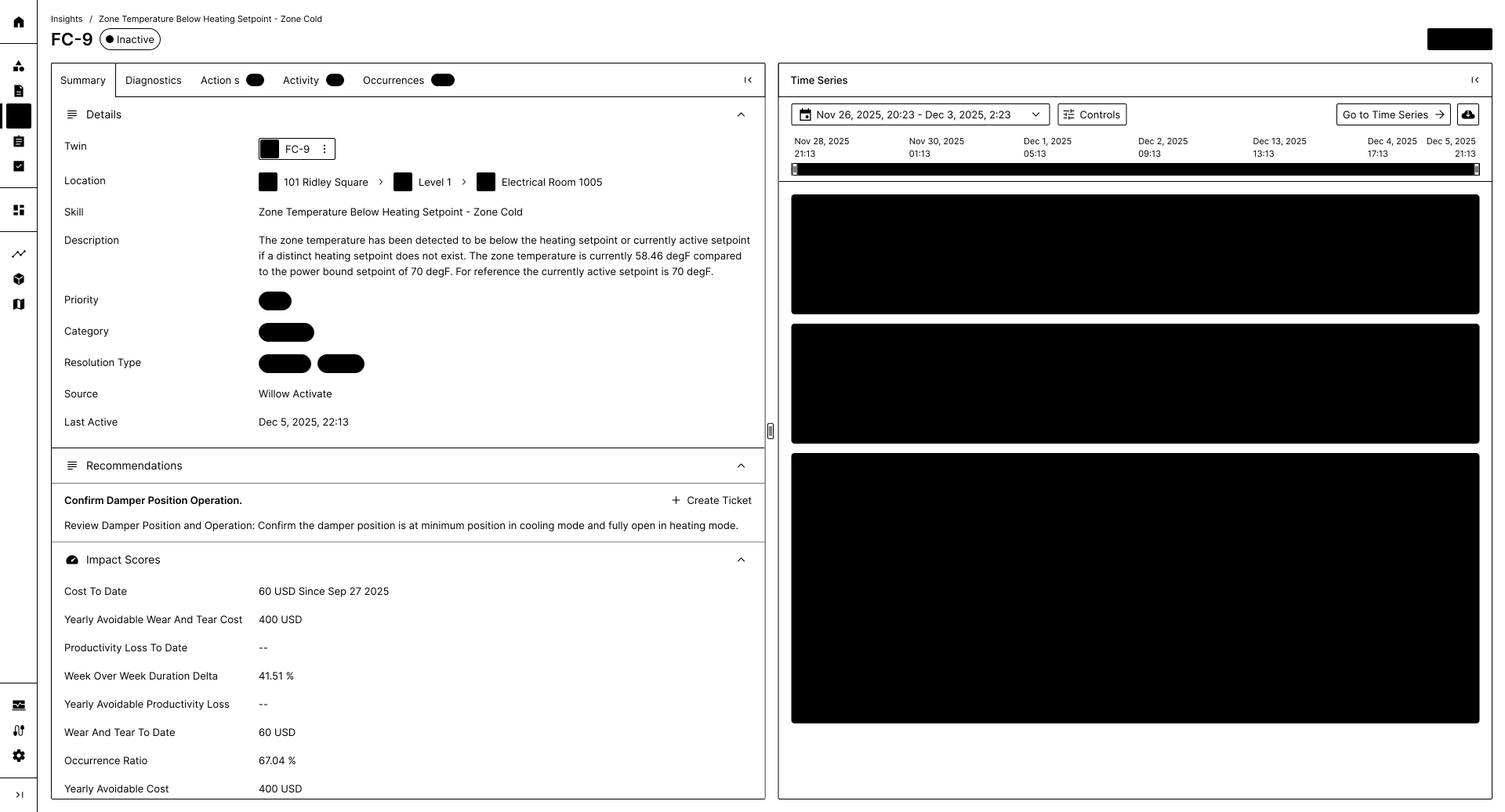
As an example, Zone Temperature Below Heating Setpoint – Zone Cold triggers when indoor temperatures drop below designed heating setpoints, indicating possible heating system malfunctions or control discrepancies.
Similarly, Zone Hot Notification detects spaces that have exceeded their cooling setpoints, often during heatwaves or cooling equipment faults.
6. Data Quality Skills
Data Quality Skills look for signals that are out of range, unchanged in a long time, updating sparsely, and similar conditions. Their objective is to ensure the accuracy, reliability, and continuity of telemetry data by monitoring sensor integrity, flatline conditions, lost connections, or suspicious readings.
As an example, Terminal Unit Zone Temperature Sensor Data Quality Concern detects communication failures, out-of-range readings, or sensor errors in terminal unit temperature data. The facility team may be advised to verify the calibration of the temperature sensor to ensure accurate measurements and confirm that the temperature sensor is successfully transmitting a telemetry stream into Willow

Similarly, Equipment Lost Data Connection (Offline) generates a critical insight when HVAC equipment stops sending all telemetry points, indicating a major data continuity issue. Another example is AHU Discharge Air Temperature Sensor Data Quality Concern which looks for calibration and communication issues. Facility teams can then take appropriate action.
7. Diagnostic Skills
Diagnostic Skills serve as in-depth support tools for troubleshooting complex, systemic issues. They analyze operational data and system behavior, providing contextual information and detailed guidance. Data is aggregated and contextualized across systems to assist technicians and operators in determining the root cause of issues, verifying operational states, and evaluating system health.
As an example, Multiple Terminal Units Served By AHU Have Dampers That Are Fully Open provides an insight that may point toward system-level control issues, wrong static pressure settings, or undersized equipment, rather than isolated device faults.
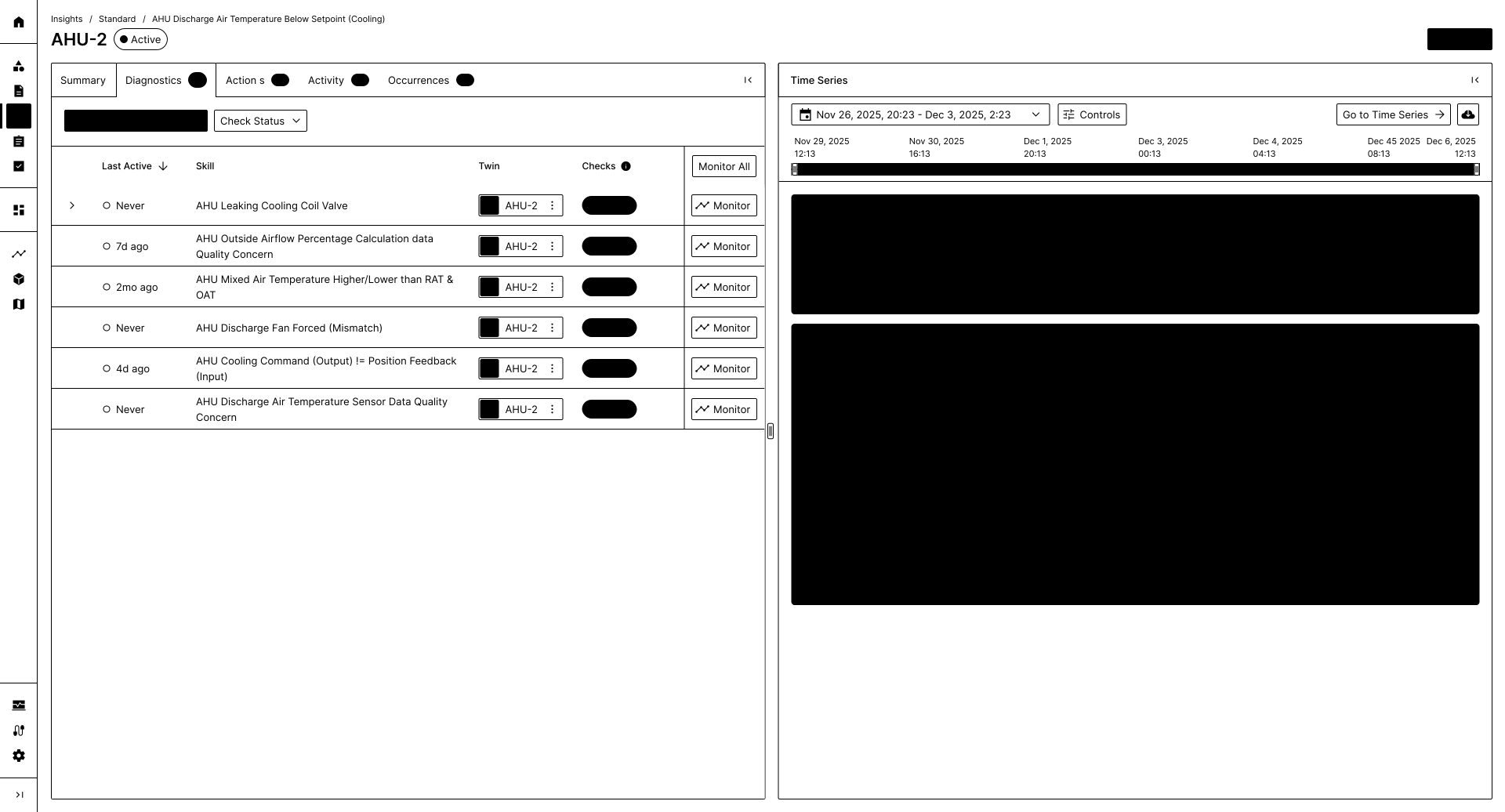
Similarly, Sensor Diagnostic Skills evaluate sensor output and health data to determine the validity and accuracy of readings, assisting in identifying sensor drift or failures on Terminal Unit, Air Handling Unit and Meter Equipment.
8. Commissioning Skills
Commissioning in context of building management is the process of ensuring that all systems and components are designed, installed, tested, operated, and maintained according to the operational requirements. The key objectives are to ensure that building systems operate as designed and meet operational needs. This includes reviewing sequences of operation and validating energy efficiency, comfort, reliability, safety, and overall system integration.
In Willow, Commissioning Skills check that systems meet their design intent, validate setpoints and sequences, and highlight deviations or configuration errors. Insights illustrate issues detected during this process.
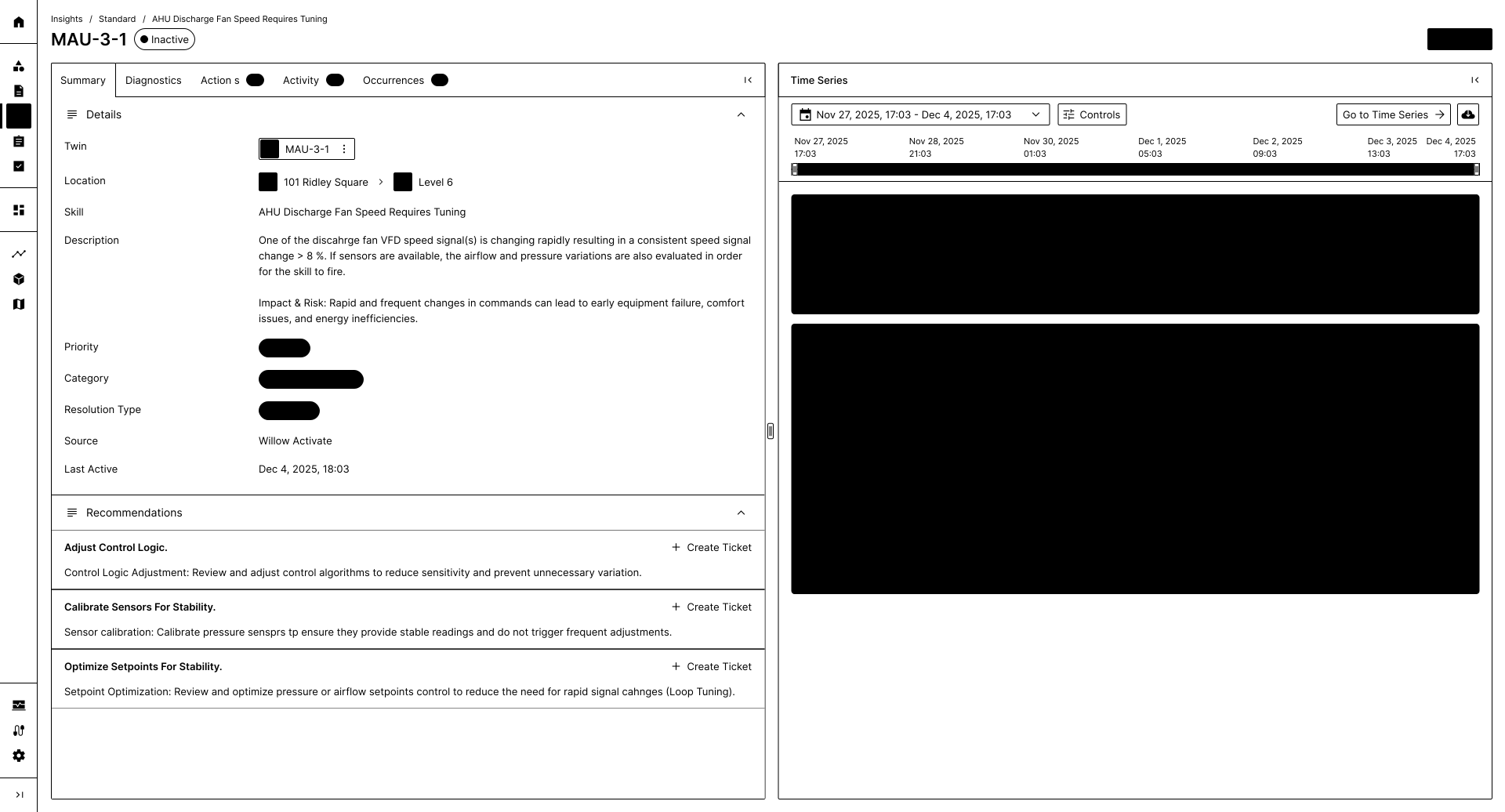
As an example, AHU Discharge Fan Speed Requires Tuning monitors for excessive variations, which may indicate the need to optimize PID loops or control programming during start-up. This assists the team in identifying real-time opportunities to optimize settings and resolve inconsistencies prior to full operation.
9. Design-Based Skills
Design-Based Skills compare asset operation and measured values to the original design intent, specifications, or standards defined for the building and its systems such as Test and Balance, i.e. TAB-documented benchmarks. These Skills are used to detect deviations from engineered parameters, such as flow rates or temperature ranges, ensuring that changes, drift, or miscalibration are quickly caught and rectified.
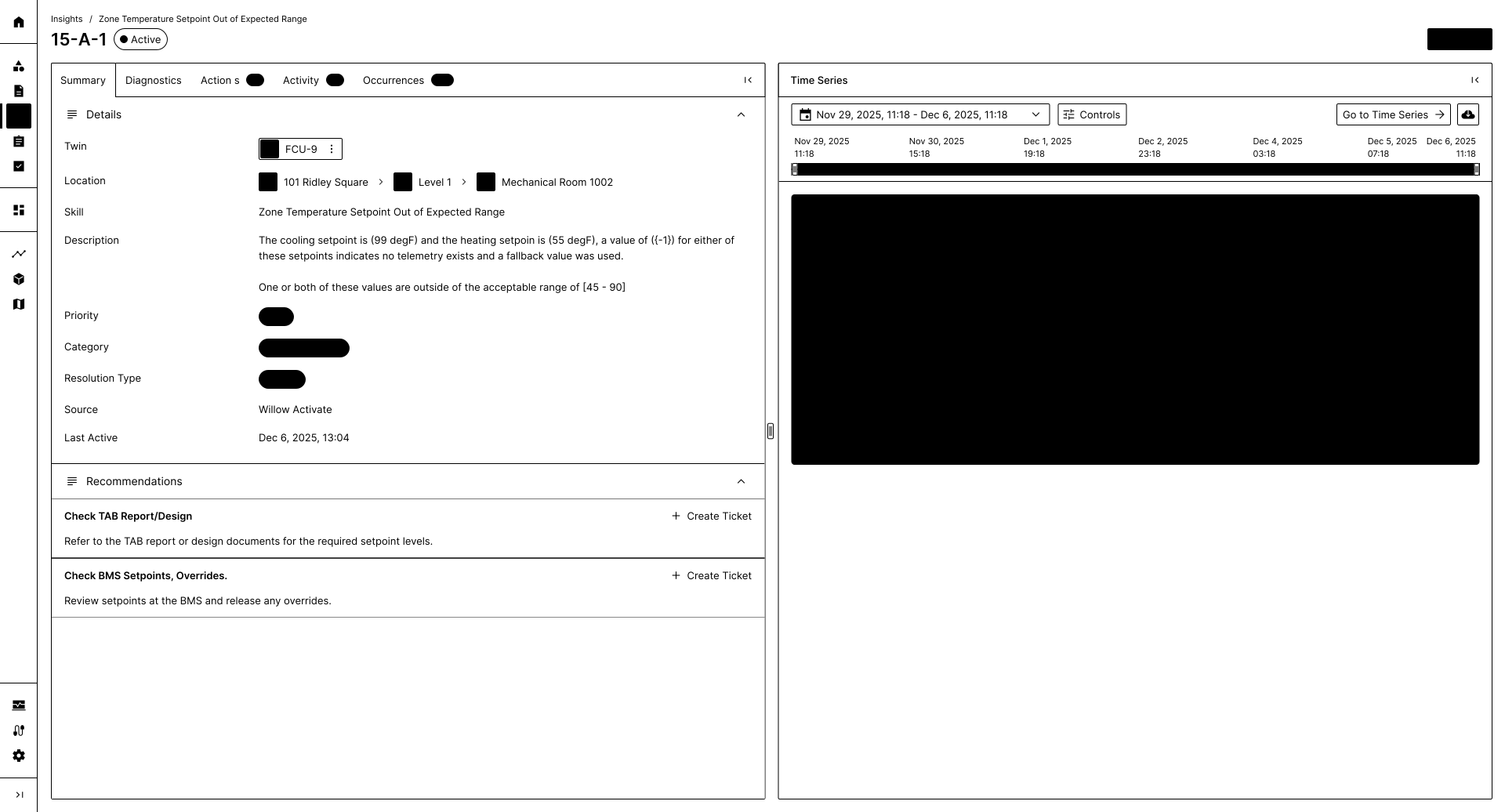
Examples include Zone Temperature Setpoint Out of Expected Range which detects when BAS setpoints diverge from design or TAB report values.
Another example is VAV Airflow is Below Airflow Setpoint with Damper at 100% which checks VAV box performance against design airflow rates, highlighting when airflow is below what’s specified, despite the damper being fully open. Recommended action may be to check damper modulation and upstream AHU, and verify design flow against TAB setpoint.
10. Energy-Saving Skills
Energy-Saving Skills in Willow are designed to identify inefficiencies, excess consumption and operational improvements that can reduce energy use in building systems such as HVAC, lighting, and utilities. These Skills analyze telemetry, trends, and equipment operation to detect avoidable energy costs, recommend optimization actions, and provide Insights for sustainability initiatives, helping organizations become grid-aware and eventually grid-interactive. Energy saving Skills are integral for sustainability and cost reduction. They audit for excess consumption, off-hours use, inefficient scheduling, and suboptimal control logic to recommend energy-saving actions.
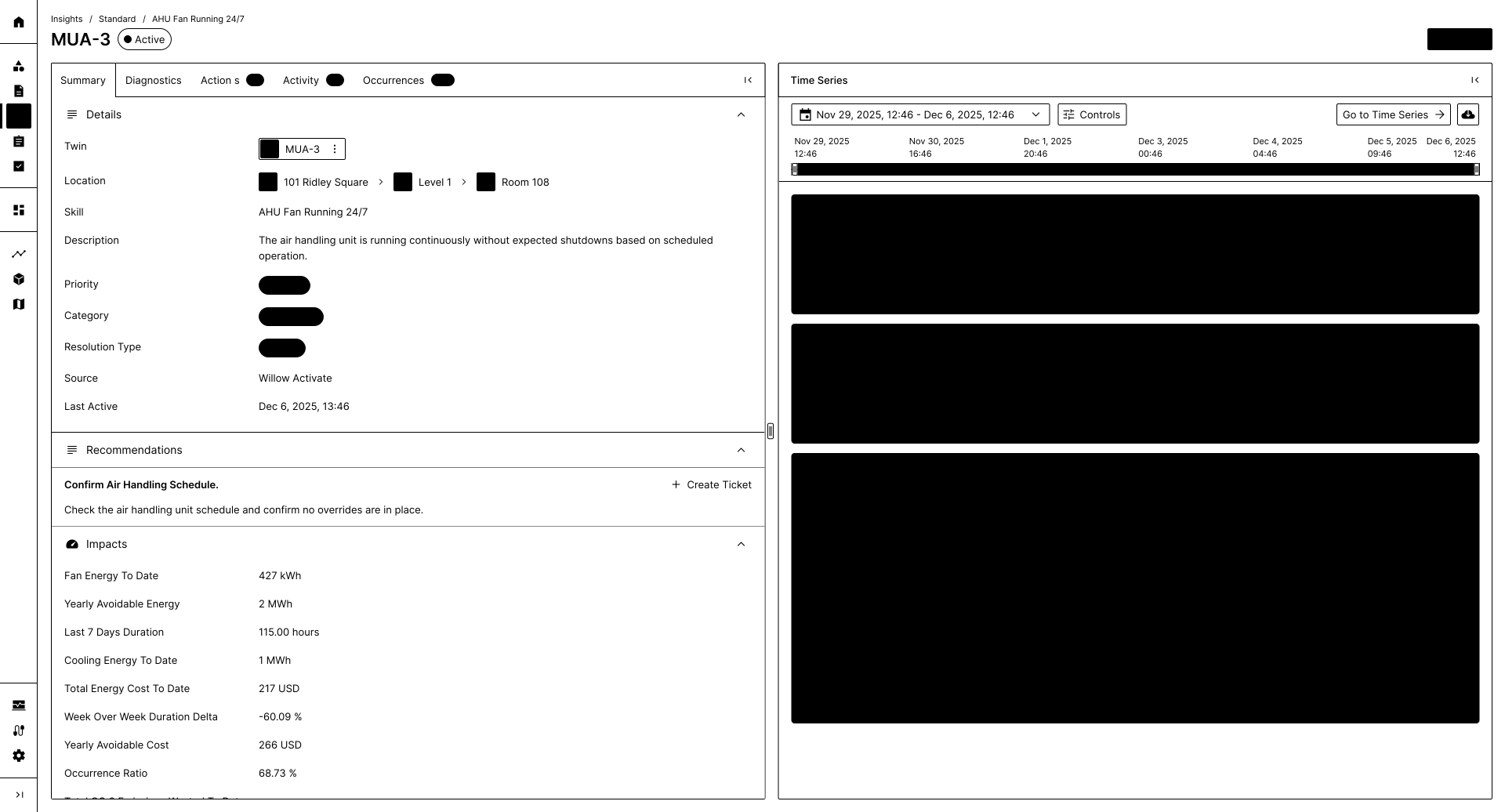
Examples include Meter readings stay consistent between occupied and unoccupied periods which flags if lights, HVAC, or other systems remain active during periods when a building is unoccupied. AHU Fan Running 24/7 identifies units that are running non-stop (often due to overrides or faulty logic), recommending corrective actions to conserve energy.
Conclusion
Working in tandem, Skills form a comprehensive digital nervous system for building management and infrastructure. By addressing every aspect of operations, from reliability and comfort to energy management and life safety, Willow Skills empower facility teams to be proactive, data-driven, and agile. Each Insight and recommended action surfaced through Skills comes with traceability to equipment and spaces, ensuring a seamless move from detection to resolution.
For organizations striving to change thresholds and build additional Skills, Activate Studio provides an easy, low-code/no-code experience. Whether optimizing daily comfort, proactively maintaining equipment, verifying commissioning, rapidly addressing critical alarms, or driving long-term sustainability, Willow’s library of Skills puts actionable building intelligence into the hands of facility teams, transforming buildings into responsive, resilient, and efficient digital assets.